Urban Exploration - The Bergesserin Sanatorium

THIS SITE IS NO LONGER AN URBEX LOCATION. IT IS UNDER RENOVATION. THE PREMISES ARE OCCUPIED 24/7. CAMERAS HAVE BEEN INSTALLED AS THE OWNERS HAVE HAD ENOUGH. LEAVE THEM ALONE AND MOVE ON.
All photos were taken by Nicolas Duseigne.
This is a documentary about the Bergesserin Sanatorium back when it was still open to visitors. It is now no longer accessible.
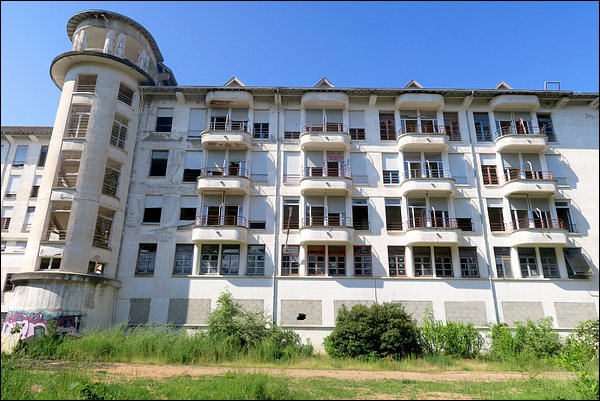
Located in the tiny commune of Bergesserin, in Saône-et-Loire, Burgundy, this facility is absolutely gargantuan. We have never encountered a site so architecturally vast in a single block (perhaps only Saint-Hilaire-du-Touvet could somewhat compete). The site is currently being rehabilitated by a nebulous group of various stakeholders, which is why we have chosen to name it explicitly. Indeed, visits are no longer possible today; at best, you would simply stumble upon a massive construction site - cleaned, scrubbed, and with roofs under renovation. To this end, the owners, fed up with trespassers and vandalism, were advised to station a Malinois shepherd on-site. To what lengths must we go?
A Response to the "White Plague"
Like so many other establishments, the Bergesserin sanatorium was designed to treat tuberculosis. Around 250 such facilities were hastily erected in France, particularly in the early 20th century. Why? To curb the terrible tuberculosis epidemic, which claimed a staggering 100,000 lives per year. The site was chosen for its lush, forest-fringed setting, its low-mountain altitude, its pure air, and a perfect south-facing exposure. Construction began in 1932, though the decision to build dates back to 1929. From the start, the project faced challenges. World War II greatly disrupted the work; construction came to a total standstill between 1939 and 1946, and the premises were even requisitioned by the occupying forces.
Pure Gigantism
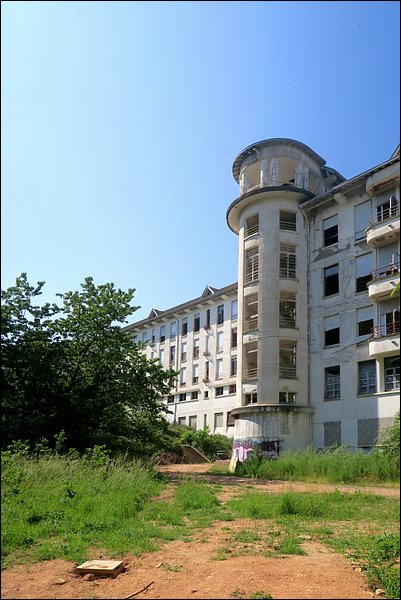
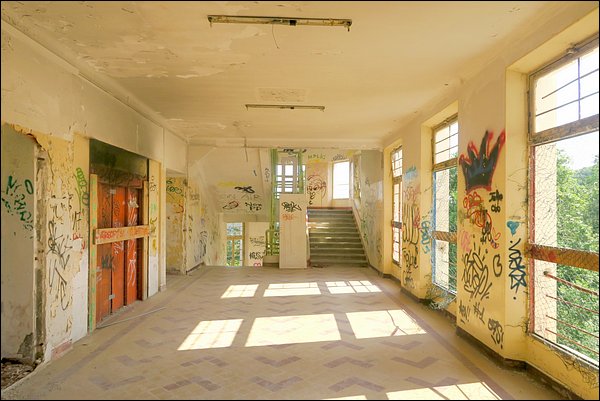
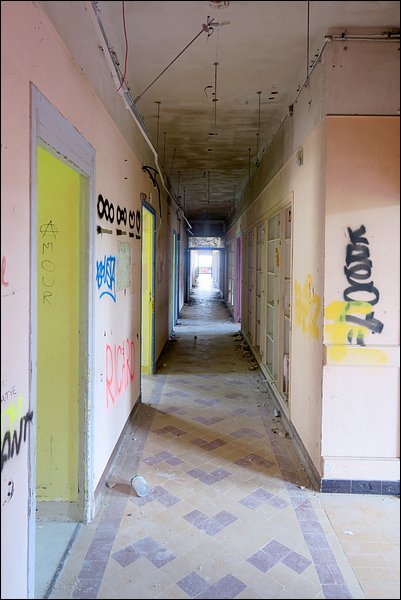
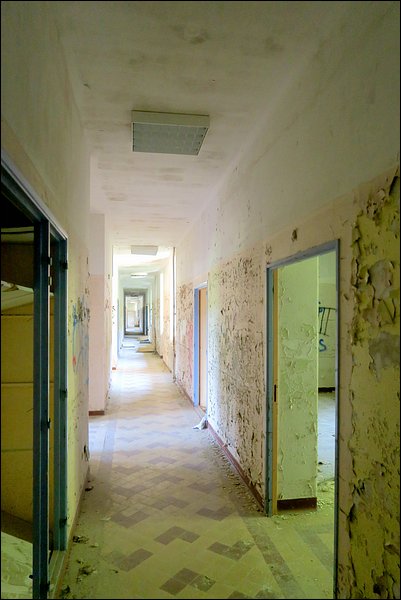
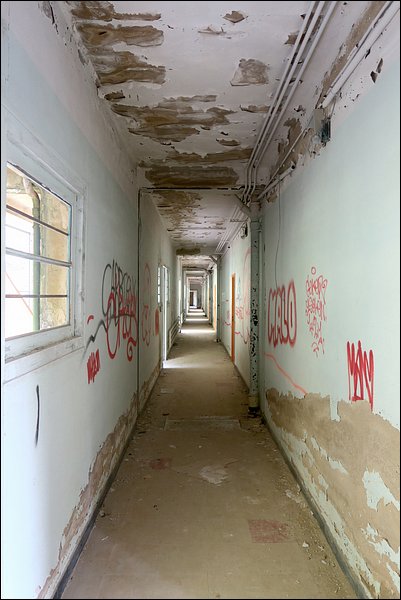
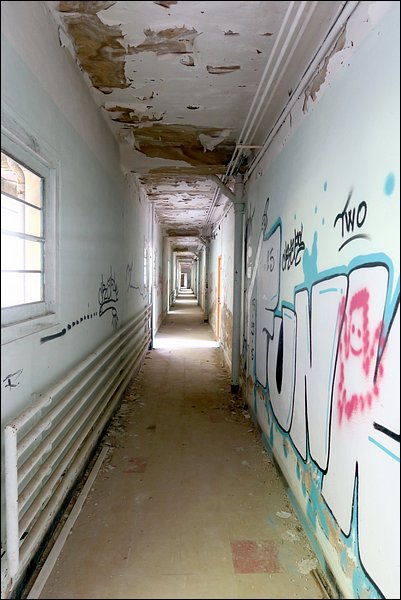
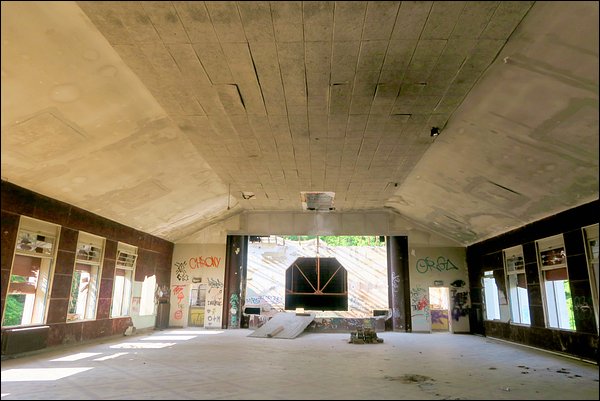
The building can only be described in terms of "gigantism." The main body is 250 meters long and at least four stories high. I say "at least" because, in certain areas and depending on the slope of the terrain, there are levels akin to basements that lead to a dizzying six floors of pure immensity.
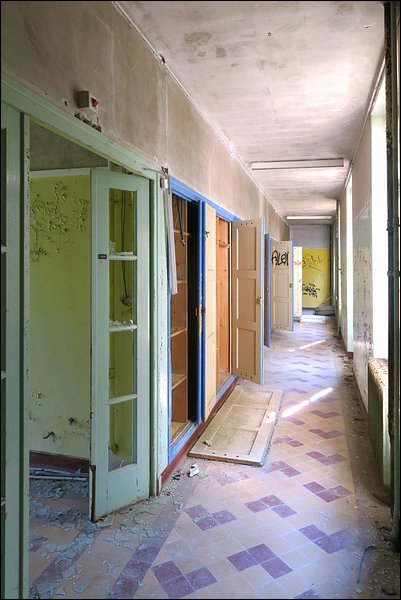
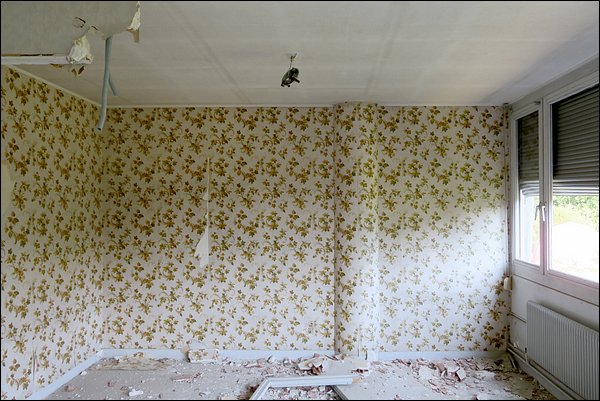
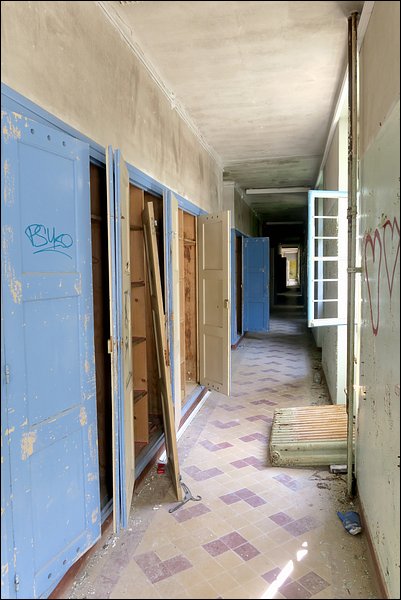
In its initial role, the building was designed to treat women. The hospital had the capacity to house 210 women, often in spartan conditions of solitude and material deprivation: immaculate whiteness, a lot of emptiness, and a long wait for healing - so much hope with ultimately nothing around it. We found no letters from patients reporting deplorable conditions, unlike other sites such as the Lemaire sanatorium in Tombeek. However, it was a forced isolation, and therefore inevitably painful. They were cloistered three to a room. These rooms were spacious and bright, giving this forced retreat a rather remarkable quality of hospitality.
Decay and Rebirth
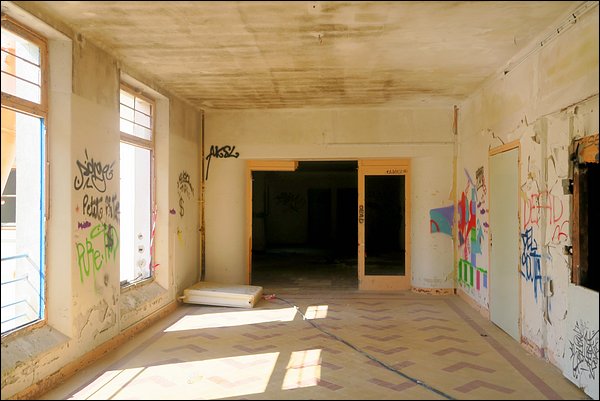
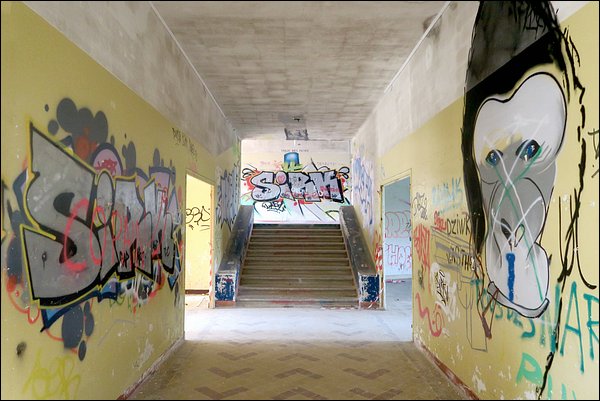
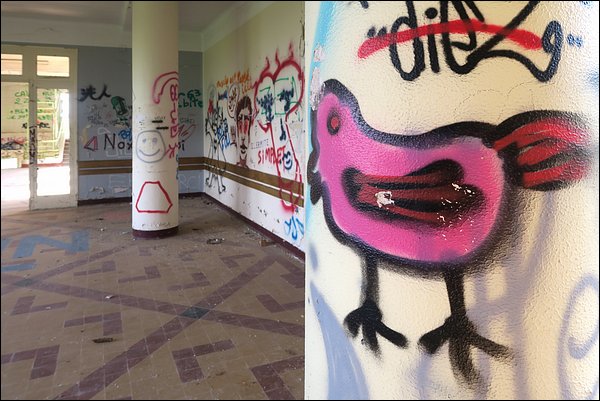
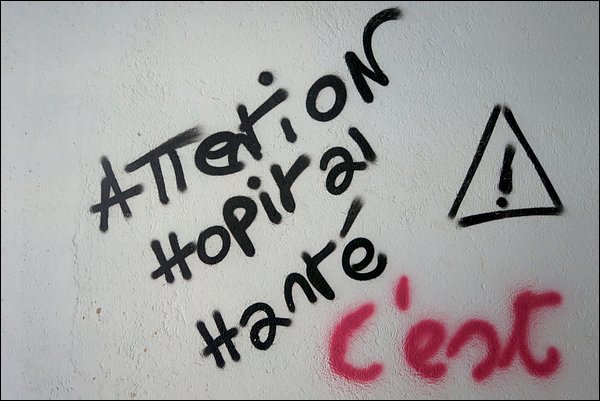
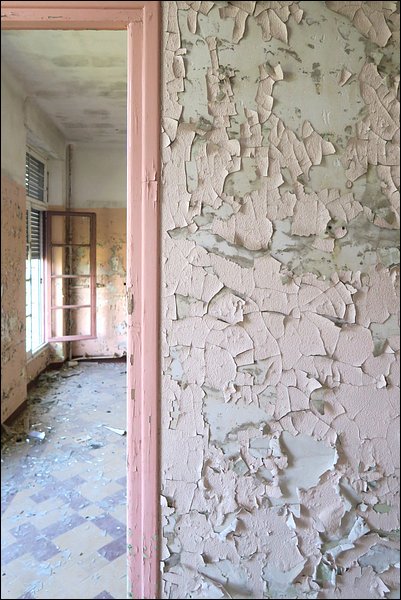
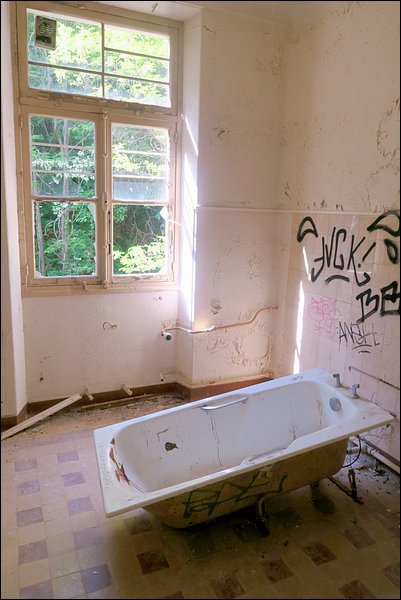
As tuberculosis was eradicated, the building was gradually repurposed. The Bergesserin town hall mentions a conversion in the 1960s into a retirement home (specifically a convalescent home linked to the Mâcon hospital). The facility finally closed its doors in 2008. This decade-long gap of destructive emptiness led to layers of vandalism. Not much remains of the original sanatorium except a gigantic concrete shell - though it remains considerable and aesthetic.
Recent press articles have reported - and even criticized - a sale at an absolutely derisory price. Without taking a side, we can note that this at least allows for a rehabilitation of the building before further extreme vandalism occurs. In our experience, we have seen places where even concrete walls are smashed by vandals; you wouldn't believe how far it goes, not to mention the arson. In short, Bergesserin is coming back to life.
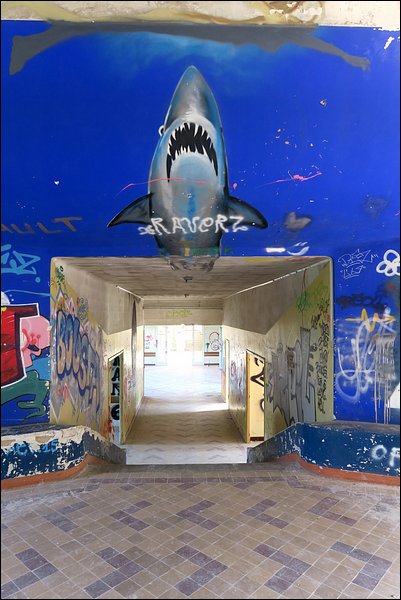
The renovation project remains somewhat nebulous to us, as we don't know the full ins and outs. However, it has been stated in various communications that the 15,000 m² facility is being renovated by 17 actors leading some thirty different projects. These are not strictly artistic projects, though what currently exists on-site seems to lean that way. The core values are environmental preservation and "living together." It will undoubtedly be a renovation aimed at creating intergenerational housing and workspaces for artistic design.
A Positive Dynamic
Here is a place that is finally breathing again after nearly 15 years of abandonment - a "white ocean liner" on the mountain entering a positive phase. This is a great benefit. We should praise the actions of the local town hall, which is committed to bringing life to its small territory in the Clunysois region rather than resorting to mindless demolition (note that Le Touvet, a comparable site, was bulldozed in 2018). Regarding our visit, the sheer scale is what leaves the deepest impression. It is an exceptional site in that regard, combining architectural lightness and light with the typical character of early 20th-century Brutalist architecture. More than Brutalism, one could call it Functionalism - but does that term truly apply here?
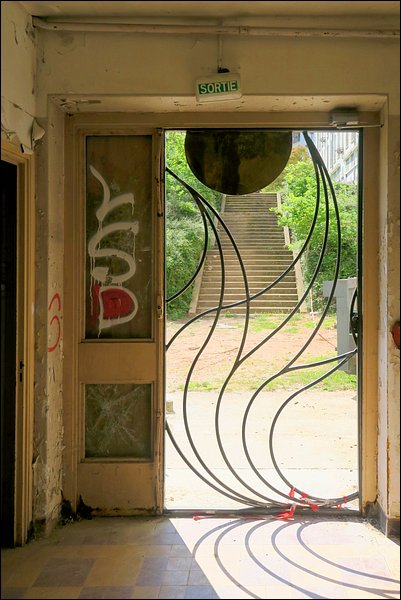
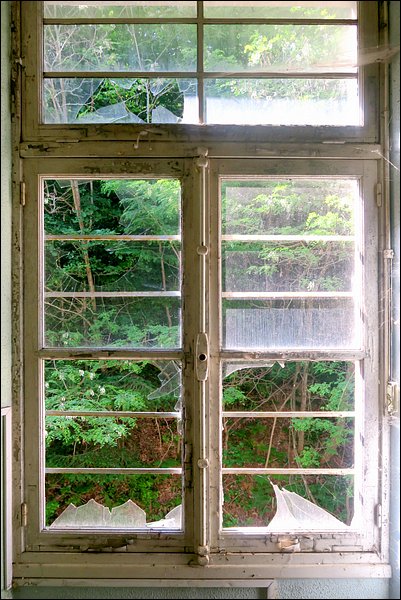
The Art Deco ironwork adds an undeniably refined yet light touch to the architecture. Given the length of the building and the layout of the care centers, it must have provided a pleasant daily stroll for the poor souls suffering from such a grave illness. How many of these women were essentially condemned? No one knows.
It all feels a bit heavy... The sanatorium, its weight, its share of horrific little stories. Not exactly lighthearted, I admit. Our thanks to Nicolas Duseigne for putting this report together. Let us now head into this immense hospital labyrinth.