Urban exploration - The abandoned house of dead pigeons
We received a traveler's photos and his narrative within the forsaken walls, and we have compiled a historical summary from them.
This house had been marked upon our maps since time immemorial. Perched on the edge of a bustling thoroughfare, the structure would ceaselessly call out to us, yet the opportune moment never seemed to arrive. Then, at last, the encounter took place.
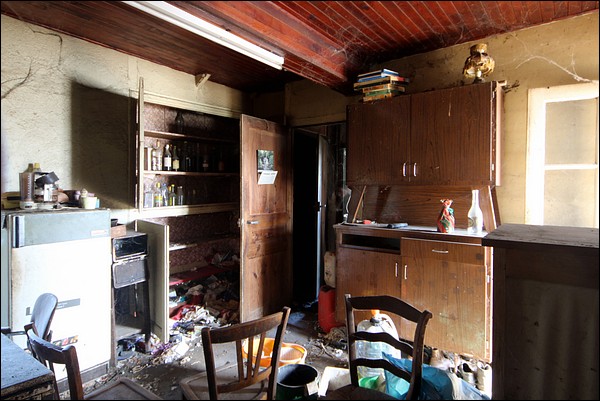
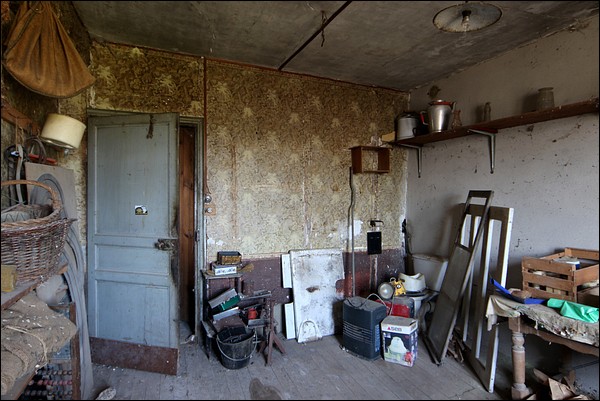
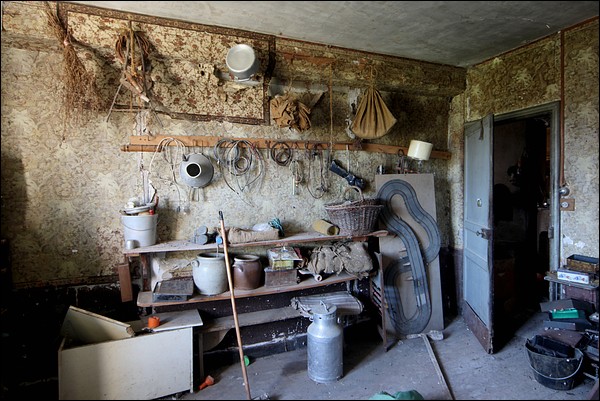
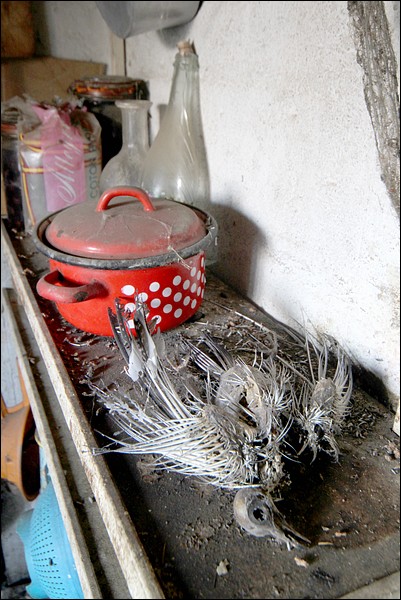
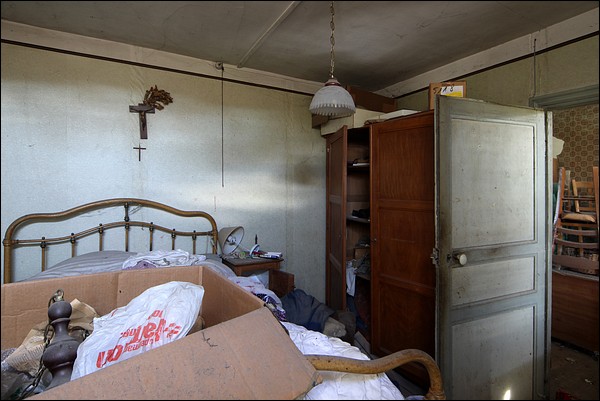
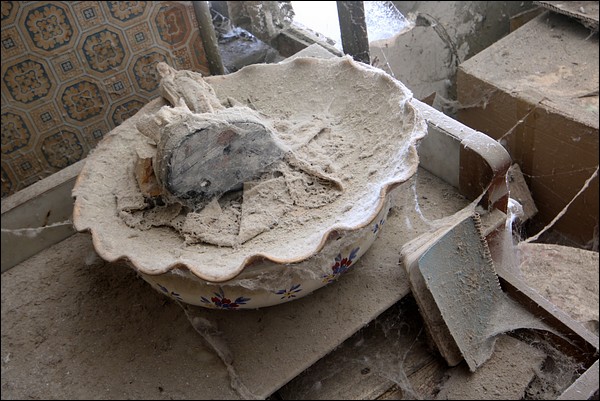
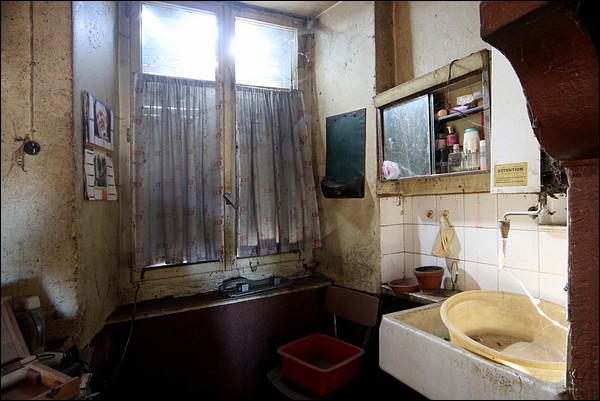
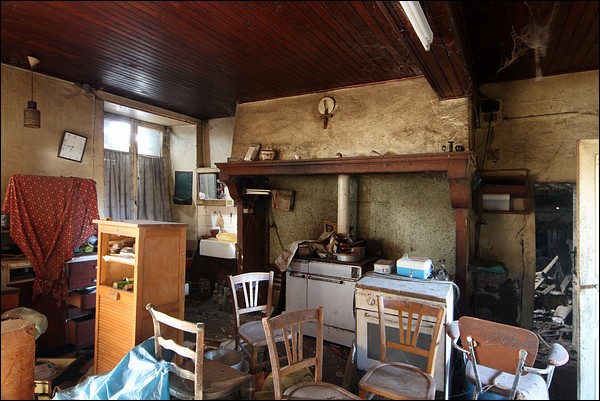
It is an abandoned dwelling, now the wretched kingdom of pigeons and, consequently, besieged by mountains of sticky, pungent guano. The initial impression is far from encouraging. Furthermore, it has been plundered - a state exacerbated by a decade of neglect. It is scarred. Yet, the history of this house reveals it to be a poignant site of family archaeology.
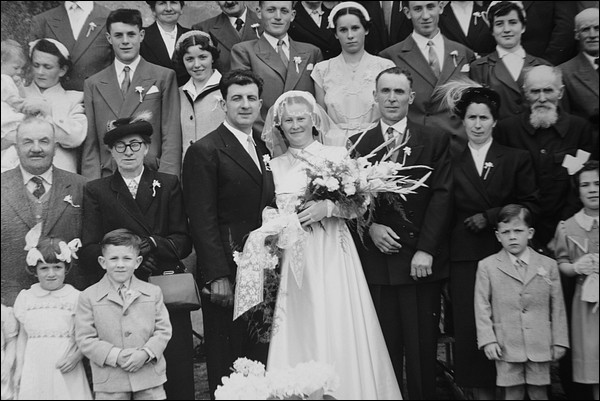
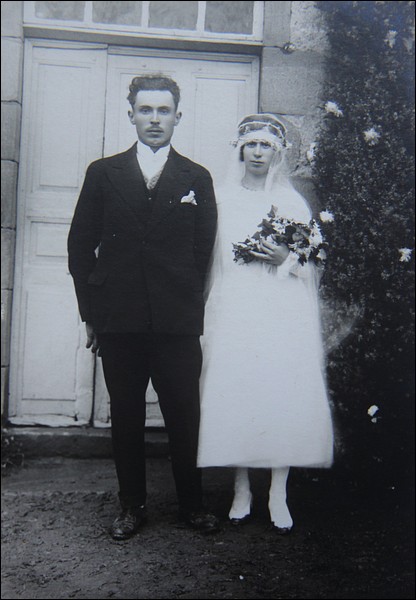
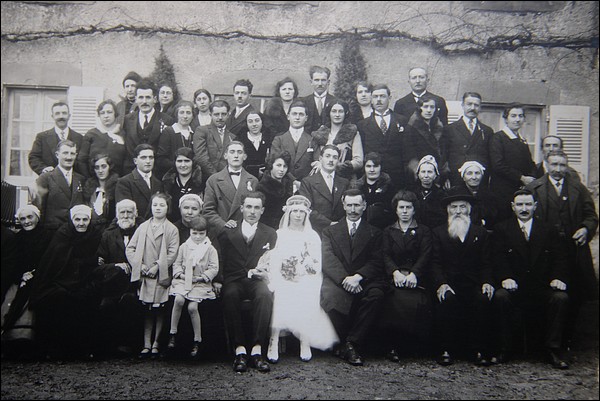
This house once belonged to Ginette and Arsène. Ginette's parents, Anaïs and Emile, were wed in November 1931. Ginette was born in October 1932. Born to farmers, she inherited their ancestral craft. On May 25, 1955, Ginette married Arsène, born in January 1929. What tale did their union tell? Was it a marriage ordained by parents, or a romance that perhaps unfolded too hastily? The marriage proved to be a fractured one.
They resided in a small neighboring village. The arrival of their son, Laurent, complicated matters, as their dwelling was ill-suited for a growing family. Consequently, they moved into this house - the very one we now visit - intending it to be a temporary refuge. Following many misfortunes, the temporary became permanent.
Arsène was a man of the sciences, a teacher; Ginette, a local farmer, found her joy in the land. The couple lacked harmony; they tore each other apart over Laurent's destiny - or so the village whispers say. Divorce was the eventual conclusion. In 1994, records show Arsène receiving mail at 71 Boulevard Saint-Jean in Puy-en-Velay.
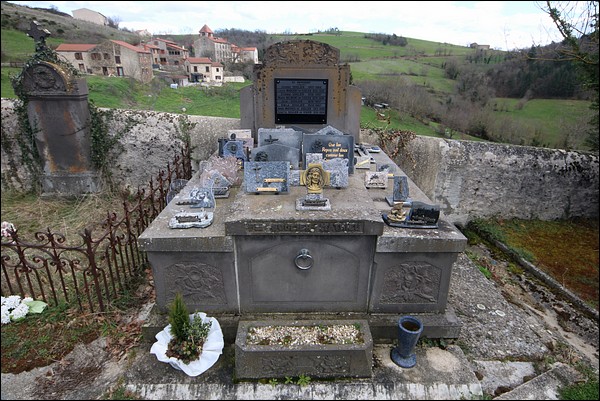
Today, Ginette rests in a family vault in the cemetery of her birth village. She passed away in 2014 and lies under her maiden name. Through a lack of foresight at the time, I did not seek out Arsène's grave - a matter of profound regret, and by no means one of disdain.
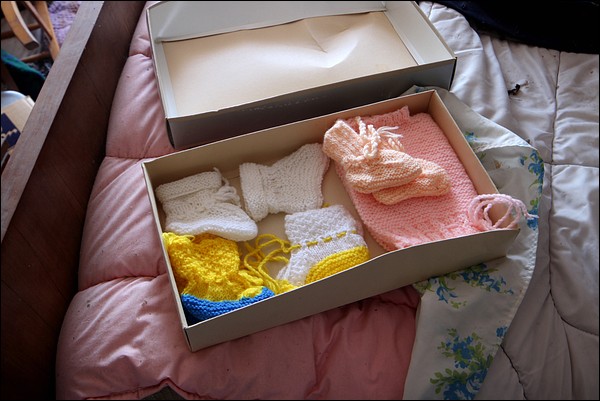
As for the house, it remains in joint ownership and is in a state of terminal distress. Its ruin appears inexorable. It was a precious and moving moment for us to discover Laurent's infant booties. We endeavored to protect them from both the plunderers and the pigeons.
Ginette's house stands along a heavily trafficked road. Thousands of us pass by each day without so much as a glance. It has been utterly forsaken since 2014. Ten years have vanished; how many vehicles have sped past this forgotten dwelling's infinite solitude?
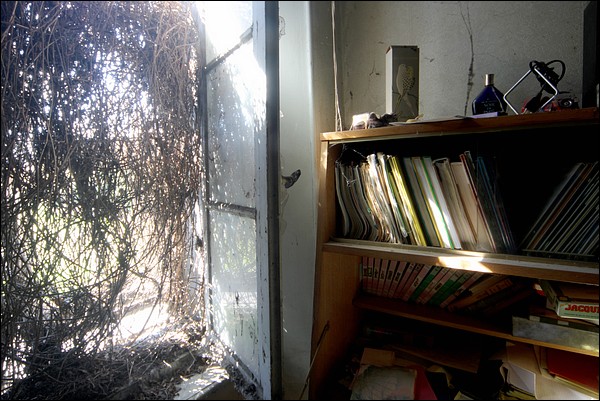
The facade is choked by encroaching vegetation. To us, it has featured on our lists for ages - a list that seems as interminable as a doctor's waiting room during a flu epidemic. One day, the opportunity finally arises. One often feels a creeping apprehension, fearing disappointment, yet a budding emotion takes hold: "Who knows? There might be some history left within these papers!"
I enter first, as a scout. I am immediately struck by two overwhelming sensations. First, the clouds of pigeons fleeing through every opening. Heavens, such a scene does not smell of roses. And more unsettling still: the electric meter is spinning. This goes against my most fundamental rules.
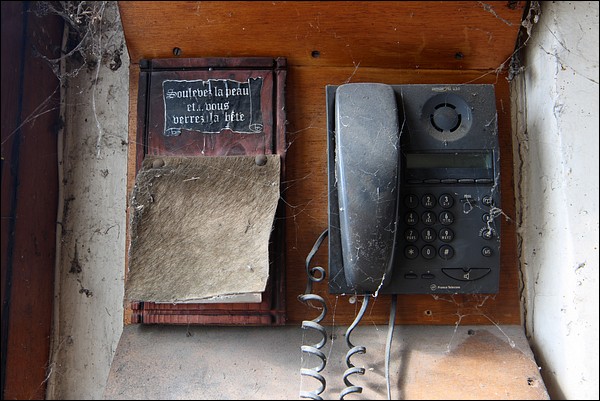
It is a very ancient model. I attempt to cut the power, only to realize it is futile: there are no circuit breakers or differentials left. It has been dead for a long time; the main power supply is short-circuiting within, causing that ominous crackling. The only solution would be to sever the cable with an axe. Whether that would be wise or foolish, I cannot say - so I leave it untouched.
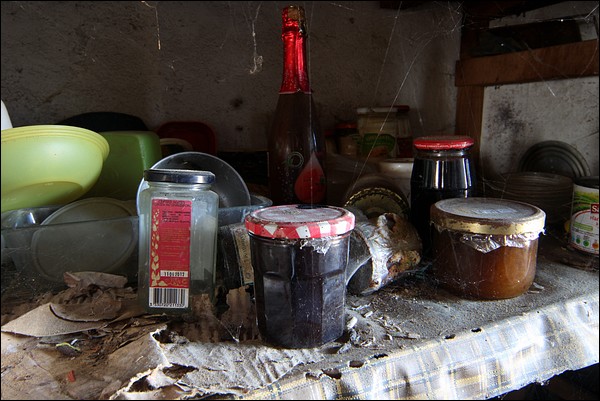
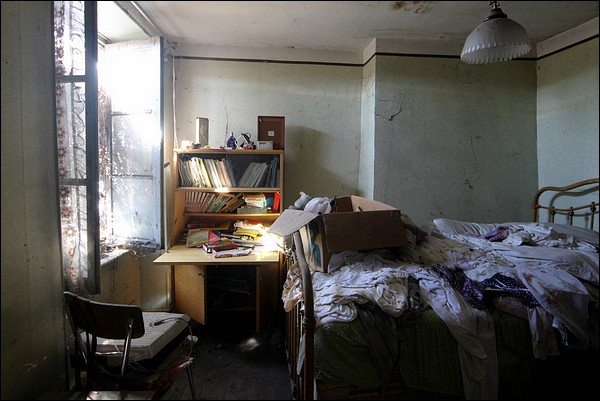
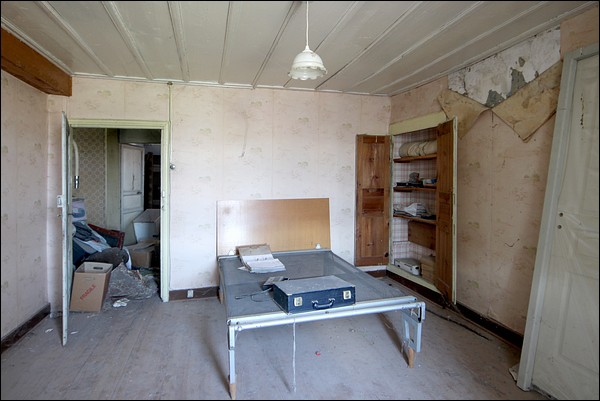
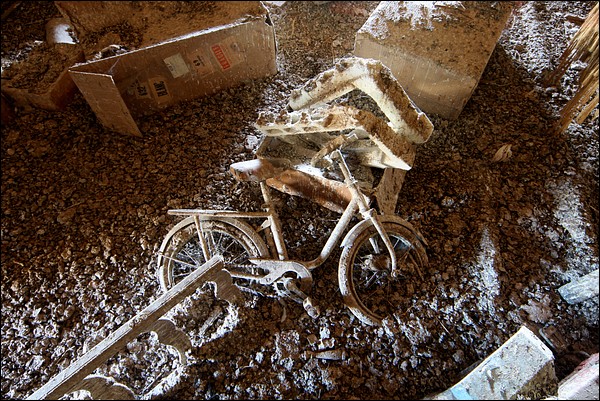
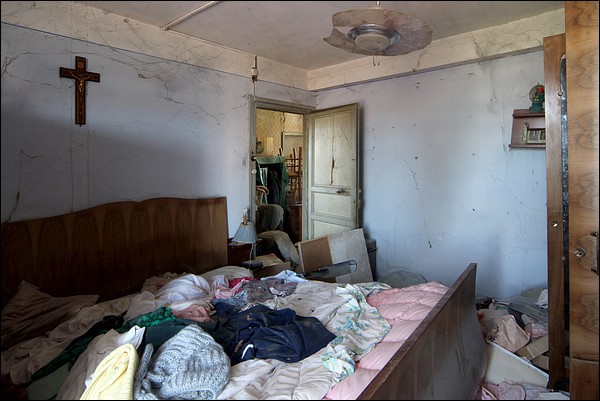
The house has suffered immensely from the birds and the abandonment. Nevertheless, everything remains inside, despite the usual disarray left by thieves. There is a mountain of papers. The children follow me inside; Alicia, an obstinate searcher, finds a bundle of fascinating documents, all to be swiftly photographed. She reminds me of Penny from Inspector Gadget: always gifted at untangling the most complex situations.
One room on the upper floor is inaccessible, barricaded by eighty centimeters of pigeon droppings behind the door. Such is the depth of the neglect. The first scattered documents reveal that this was the home of Ginette and Arsène. Simple people, good people, too - as they are remembered in the village.
Our story begins long ago in a hamlet lost in the countryside, bearing an atypical and enchanting name (what a pity I cannot disclose more). Anaïs and Emile were married there in November 1931. In October 1932, Ginette was born. Her childhood unfolded in a somewhat harsh agricultural setting; she spent part of her youth amidst the Second World War. In those times, life was easy for no one.
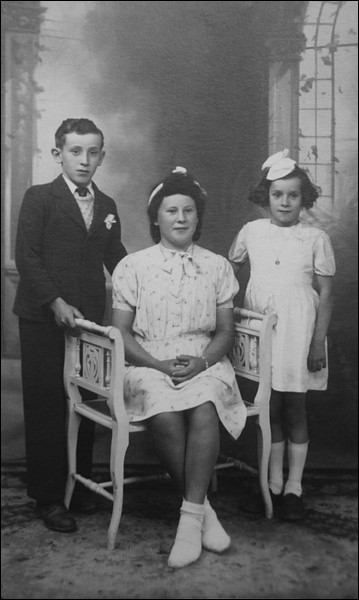
With her brother and sister, she posed for a photograph at the war's end. Even as a young adolescent, one can sense her strength; there is no doubt she worked hard on the family farm, a life in which she flourished. Tomorrow, her fate would shift. As the war period faded, light gradually returned. In 1955, Ginette married Arsène, a local boy.
Was it a marriage desired by the parents? Unlikely. Or a story that moved too fast? One might guess as much. Soon, Laurent entered their lives. In his red pajamas, he was a beautiful babe. However, it appears that stark housing problems began to cast gray clouds over the atmosphere; threats loomed.
The house in the "exotically-named-village" was too small; the couple was fiercely lacking in means at that moment. They took a temporary lodging a few miles away - a house by the roadside. It was poorly adapted, unpleasant, a "patched-up shack," one might say. "It shall be temporary," Arsène wrote in a letter to his notary. That "temporary" became the permanent reality we visit today.
With the lodging being what it was - a "paltry makeshift," as Arsène declared - new tensions emerged, growing over the years into what was described to me as an "electric" atmosphere. In truth, Arsène did not desire any of this.
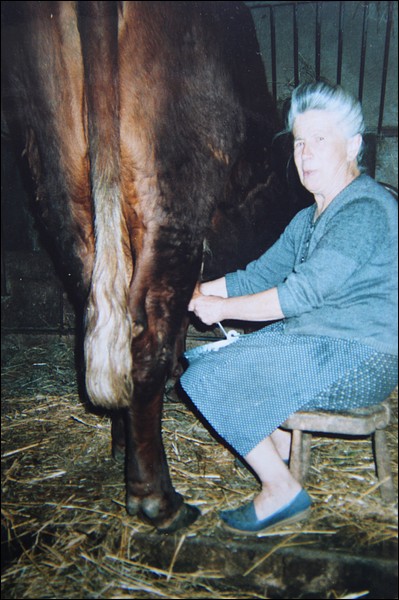
The couple tore themselves apart over their son. Ginette belonged to the earth. She kept a cow. She took pleasure in a quiet, regular agricultural life. Arsène was a man of science, remembered by some as a teacher (though witnesses admitted their memories were fading). Regardless, strong dissensions surfaced regarding their child's future.
What was the true course of these events? That memory belongs only to the family. We only know that by 1994, Arsène was living in a large city some distance away. A divorce was inevitable.
In the house, Laurent's baby socks and layette still remain, all hand-knitted. A true marvel, left untouched.
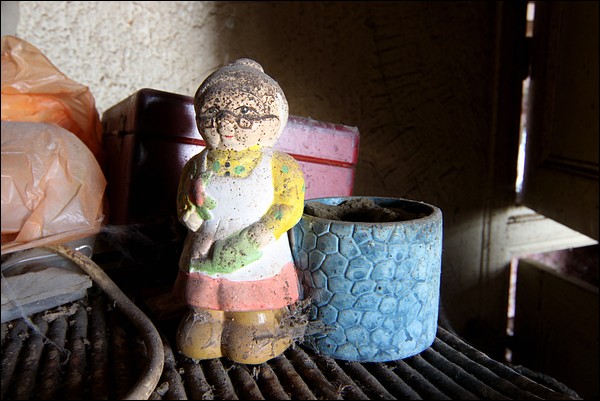
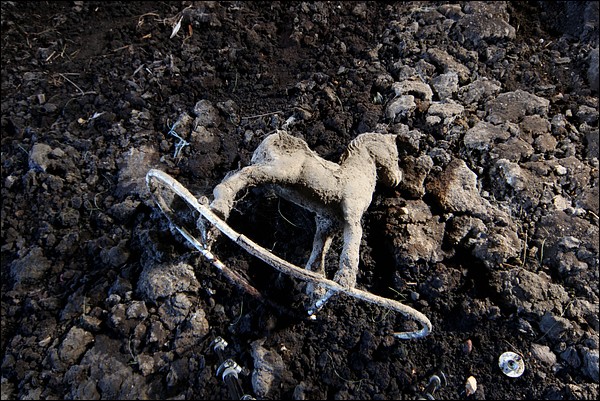
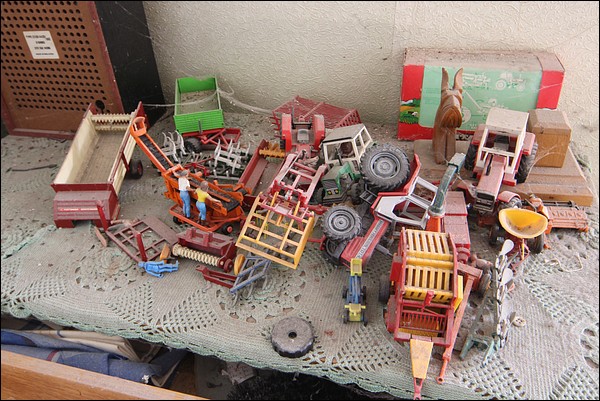
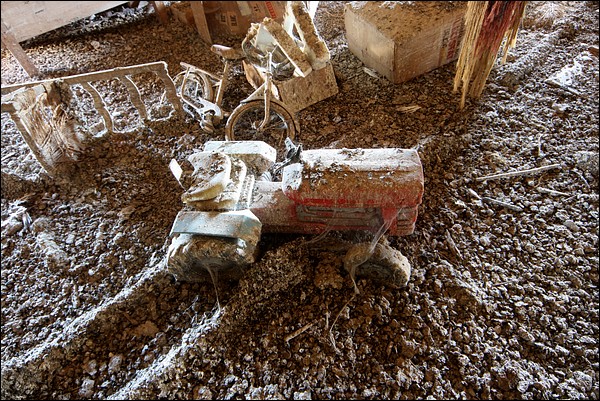
Amidst this gathering darkness, one can still see that the family was simple and beautiful. In Laurent's bedroom, his toys remain. How amusing to see they are agricultural machines! Some games are from my own childhood; I recognize the boxes - they had completely slipped my mind. Today, he follows a profession that is neither his father's nor his mother's, and he is successful!
The last calendar in the house is dated 2013; Ginette left us in 2014. Tomorrow, we shall go in search of her, and as is often the case, it was no "long, calm river"!
Under a generous and pleasant sun, I set off with the children to the small cemetery. Having scoured the grounds, we found no one corresponding to the family. Near the center lies a discreet common grave; I harbor fears. I call the town hall - it is a tiny commune, and no one is present today. We set off for new adventures toward Clermont-Ferrand; such is destiny.
Returning nearly a week later, I stop before the cemetery, thinking perhaps I had... wait, I see the town hall is open! I rush inside.
In the village center, an elderly person is struggling. I help him into a car (the driver couldn't lift the old man): at least I have been useful today.
At the town hall, the welcome is warm, to say the least. I learn that Ginette is in a family vault in her birth village, "all the way down on the left," they explain. I go there at once, and... yes, they spoke the truth with a touching clarity (they were fond of Ginette). She is buried under her maiden name, in the heart of an enchanting landscape.
Unaware of the family history at the time, I did not know that Arsène lay just a short distance away. Now, all that is far from me; one of these days, I shall go to meet him, that is certain.
Upon Ginette's departure, a technical survey of the house was conducted, suggesting an attempt was made to sell it. For one reason or another, it failed. Now, the ship has completely foundered, given the considerable damage wrought by the birds.
When the electric meter finally burns out (if it has not already), will it take the house with it, simply melt away, or blacken the wall with hideous soot? Abandonment is a cruel thing. There is no doubt that intrinsic reasons have forced this fate: no one would voluntarily let an entire house go to ruin like this.
We make coffee in the grass, surrounded by a thousand daisies. I tell the children that it is a noble gesture to honor graves, even if we do not truly know the people. They are part of a narrative; we are strangers who enter at the very end of the journey. The children understand; they observe these steps (it is not the first time). Under the pleasant sun, it is a blessing that we carry out these gestures together.