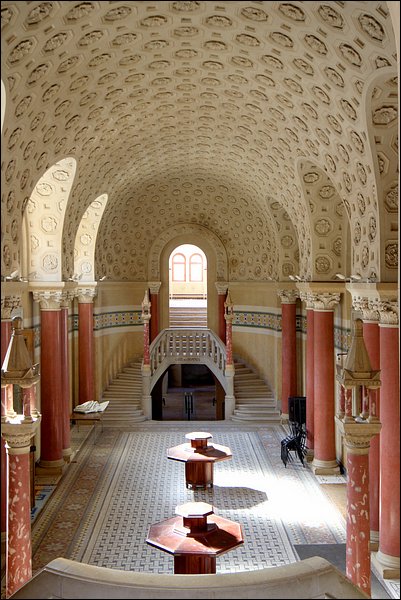
Urban Exploration - The Pink Baths
We received photos from a traveler and compiled them into a historical summary.
Spa towns often possess a certain something that makes them incredibly endearing; perhaps it is the casinos, the glitzy hotels, or that pervasive sense of luxury where every detail matters. In this regard, Vichy is at the top of the list.
This is how I began to take an interest in abandoned thermal buildings, only to be surprised by just how many there are: green, pink, blue, three yellow establishments, the multicolored one, and two whites. And still, new discoveries are added every month.
The fact remains that some thermal centers are not doing well; bankruptcy is lurking just around the corner. Rennes-les-Bains seems somewhat disliked by its public, which does not bode well for the future.
Today, I am taking you to a very well-known site, yet one that bears witness to a sumptuous grandeur: a pure architectural wonder known as the Pink Baths (Les Thermes Roses).
A Vision of the Early 20th Century
Surprisingly, the construction of these baths is not ancient; they date back to the very beginning of the 20th century. A previous spa station once stood on this spot, but it was razed to make way for this building, which was erected directly over hot water resurgences to capture the springs at their source.
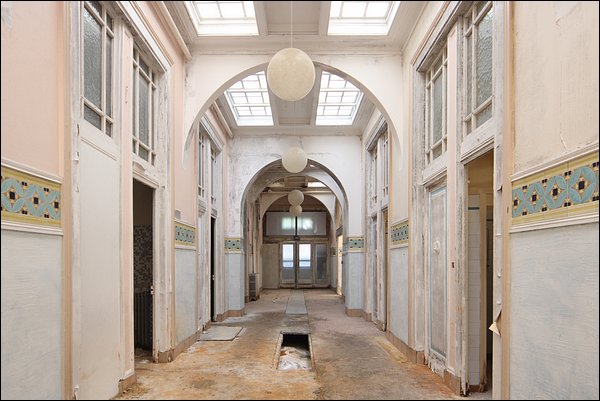
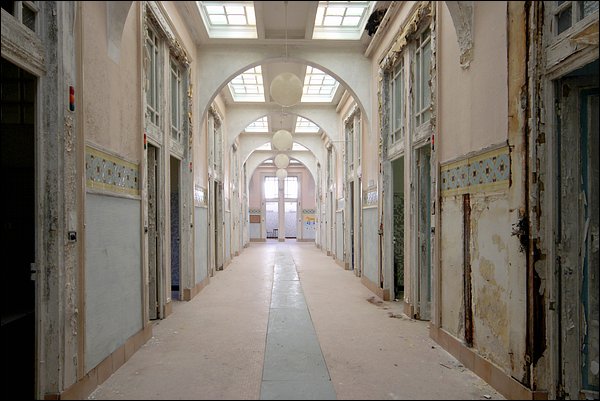
The facility closed twenty years ago. The town hall then bought the structure for a symbolic euro to protect it from rapidly progressing decay. A few years ago, the buildings were sold for over 700,000 euros. The real estate company that purchased them is now being criticized by clients for failing to meet any deadlines, which explains why the building is still in a state of limbo today. The project involves the construction of a luxury hotel featuring balneotherapy rooms, a swimming pool, a spa, a restaurant, and seminar halls.
The Pink Baths are among the most beautiful in France, with no exaggeration intended. They are the living memory of what thermal cures were at the start of the 20th century - notably that exuberance of pomp and wealth. The town itself looks as if it were plucked straight from a grandiloquent Claude Lelouch film.
Marble, Stucco, and Mosaics
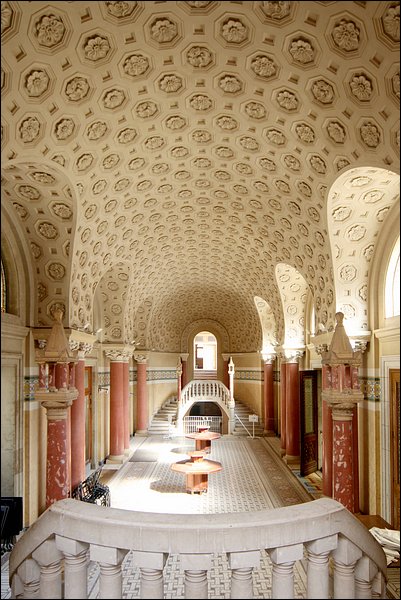
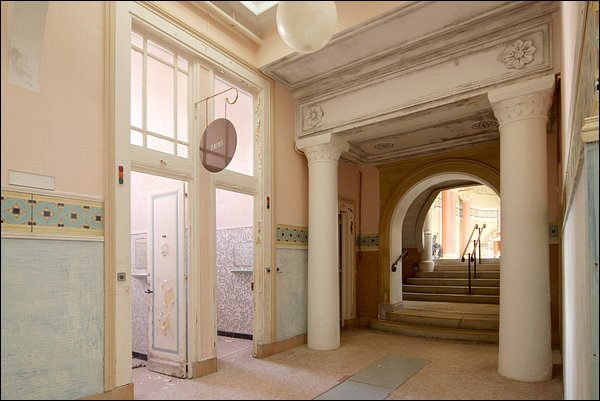
The exterior is based on an architecture inspired by Antiquity, particularly with its massive, imposing colonnades. The interior reminds me of Italian Rococo, with its deluge of marble, stucco, and moldings.
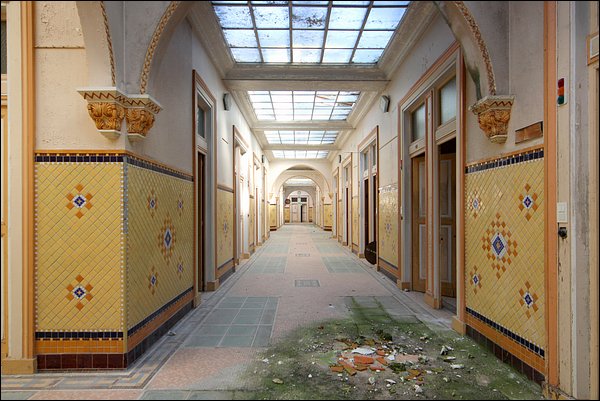
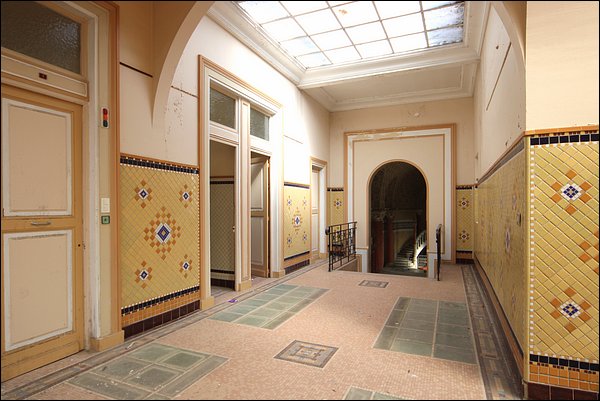
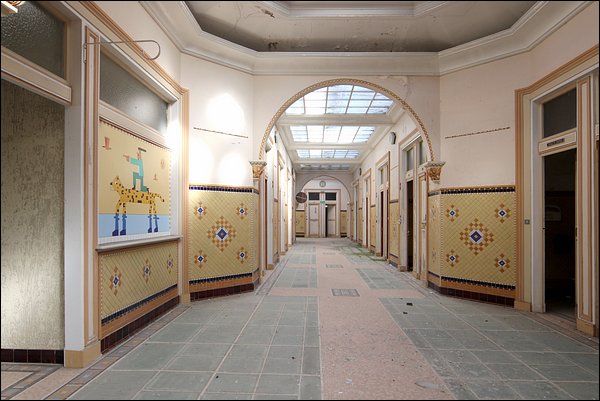
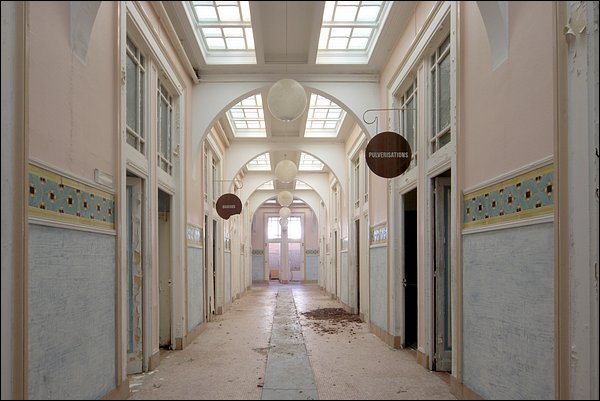
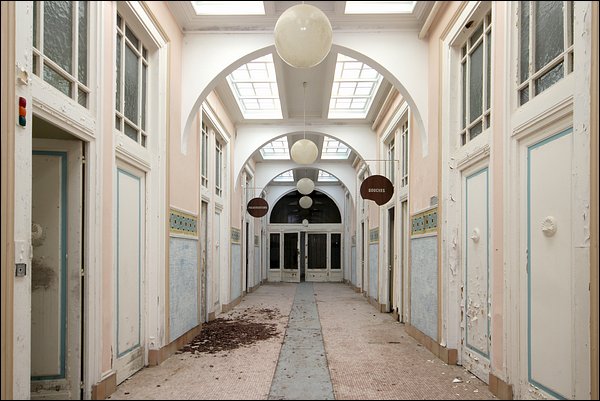
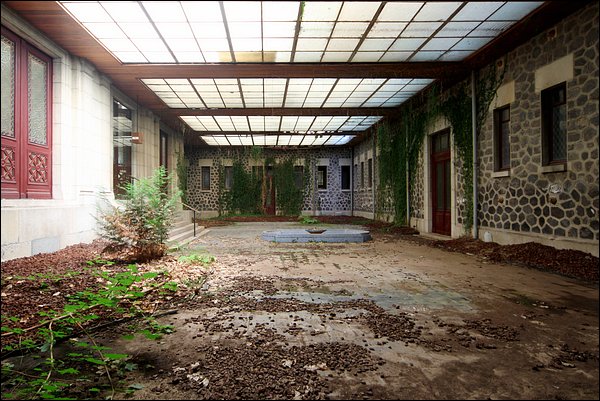
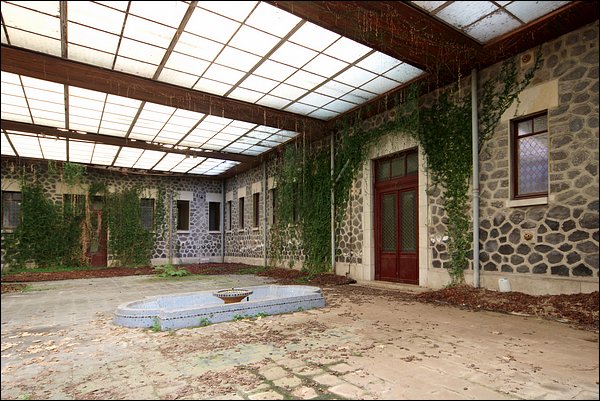
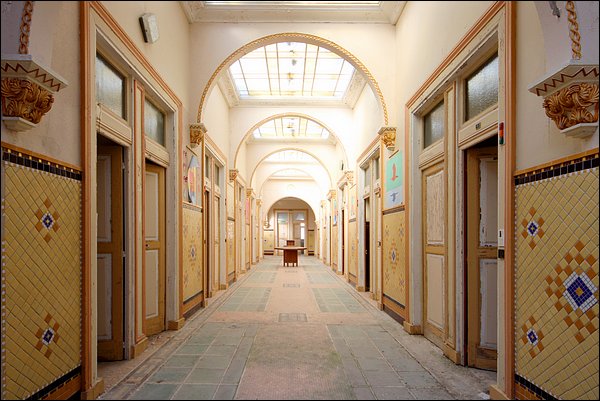
The building features a vast entrance hall called the promenoir, which showcases a very bold style of opulence: red marble columns, abundant stucco, and molded ceilings. Although exuberant, the overall effect demonstrates a balanced sense of good taste. Behind this lies a vast atrium covered by a glass roof: the patio.
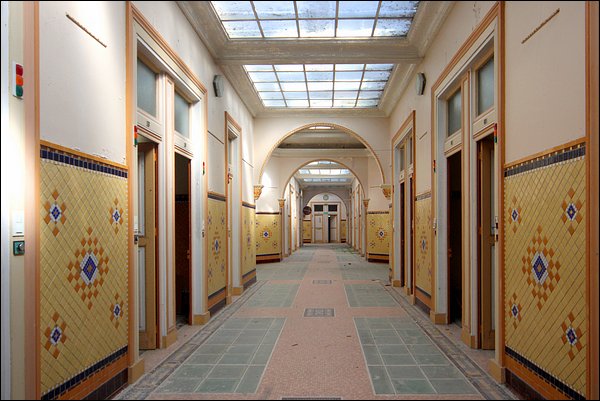
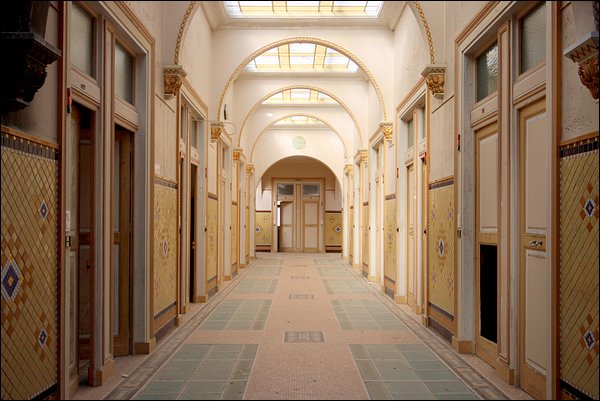
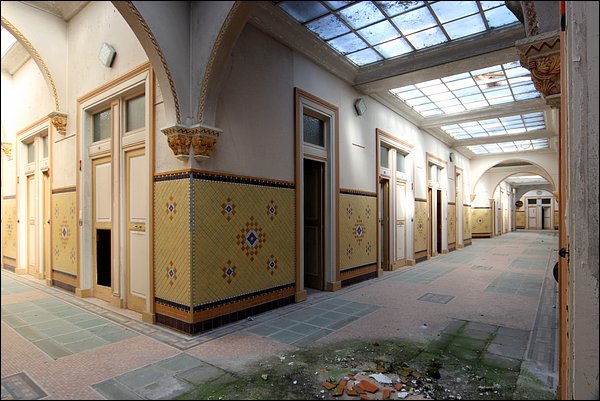
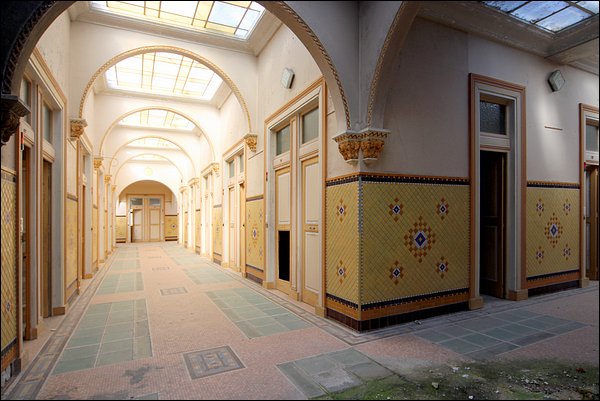
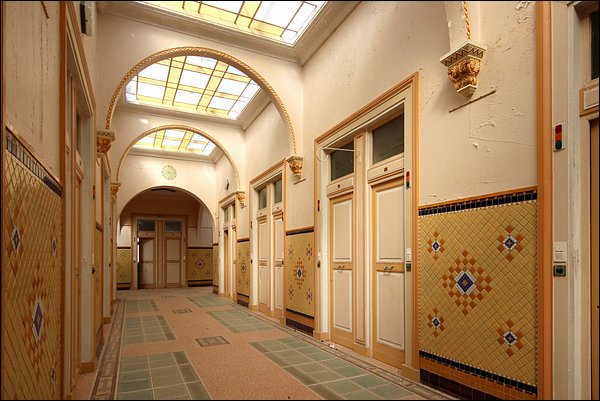
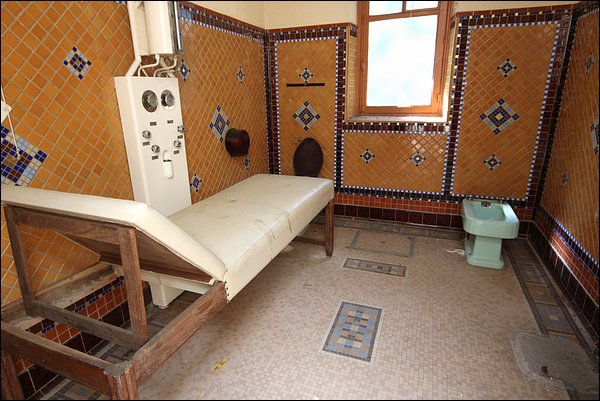
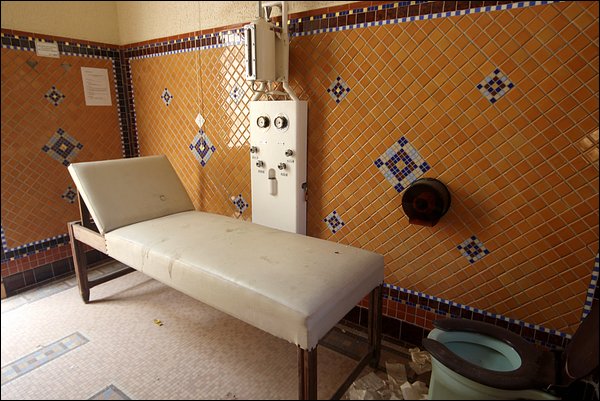
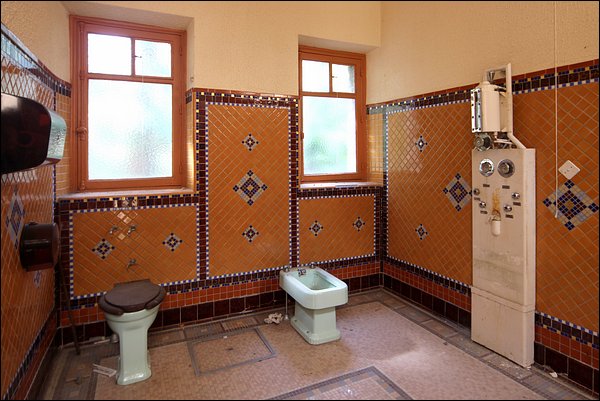
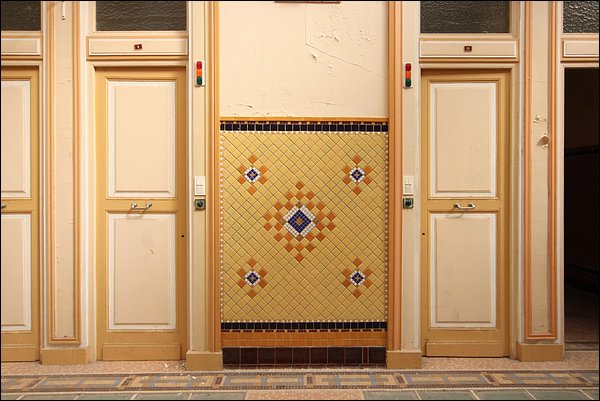
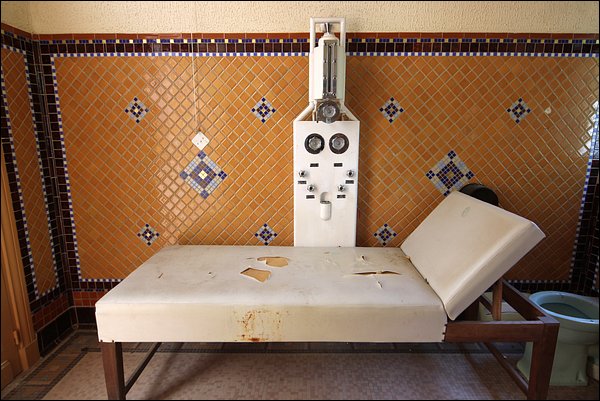
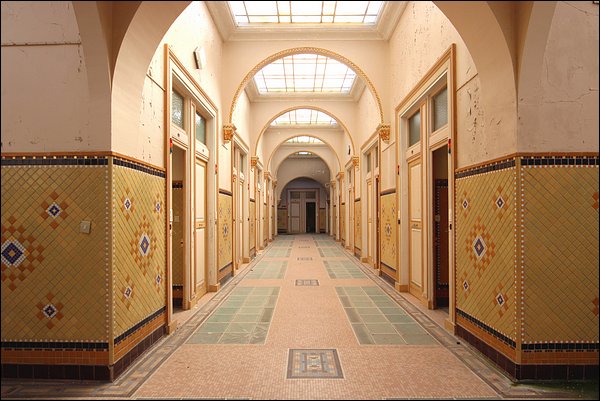
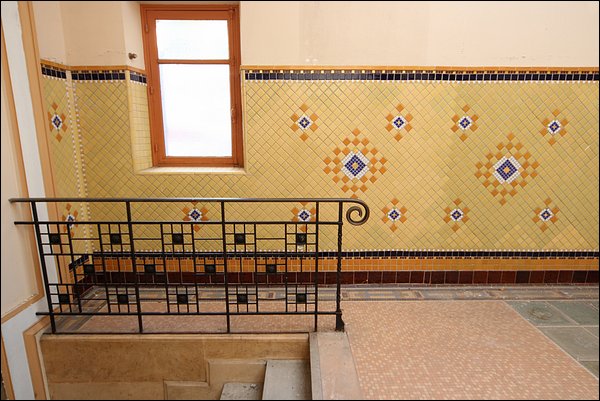
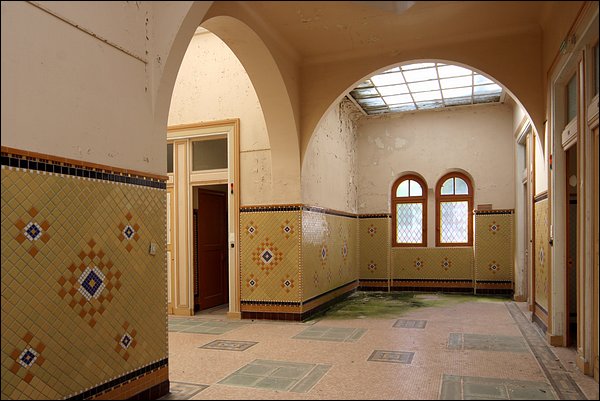
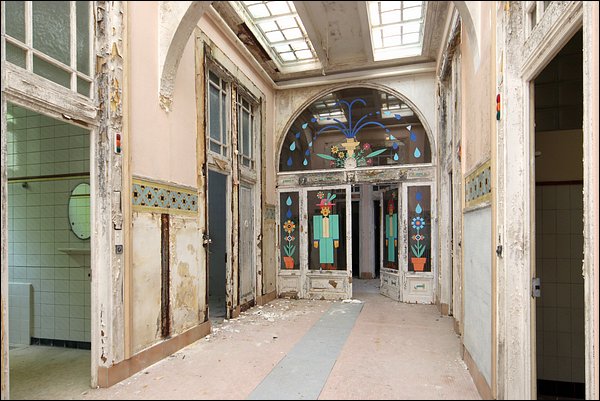
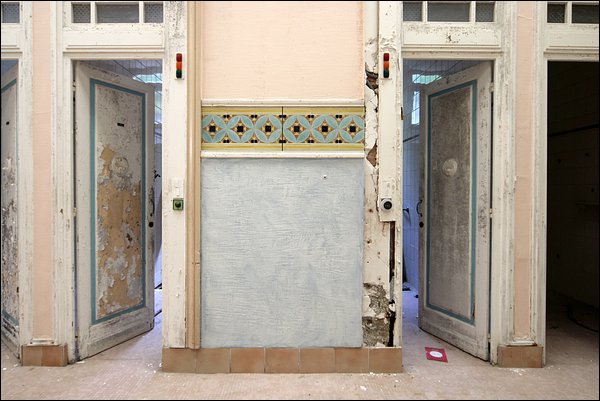
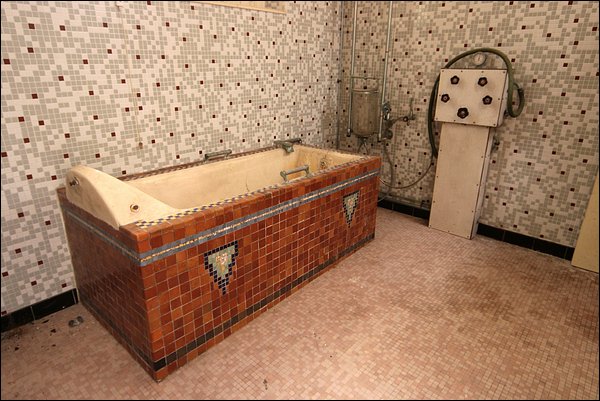
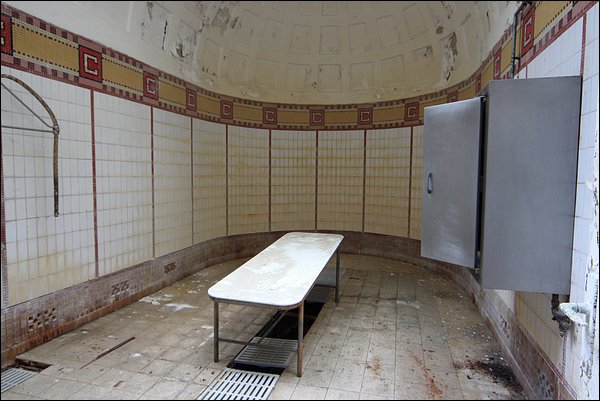
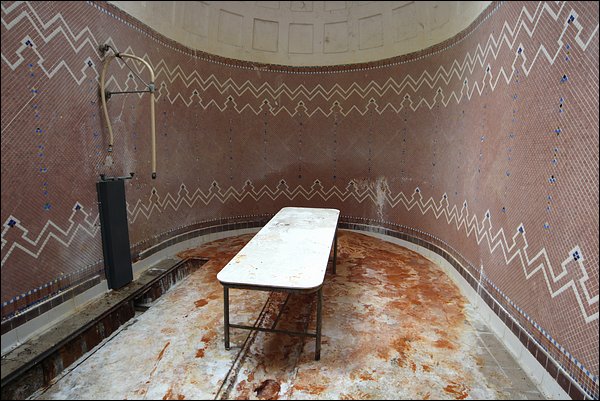
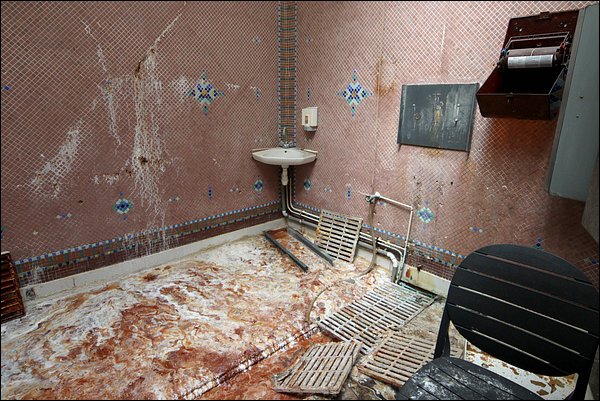
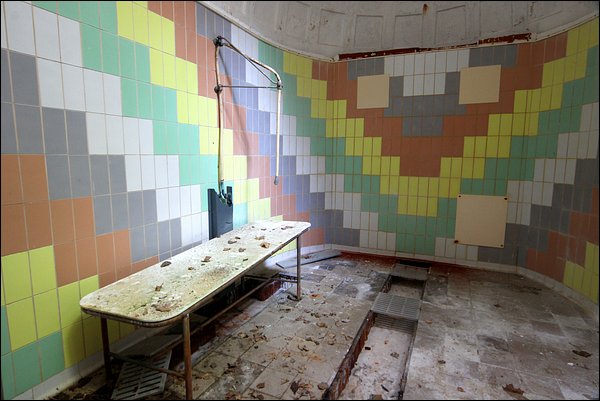
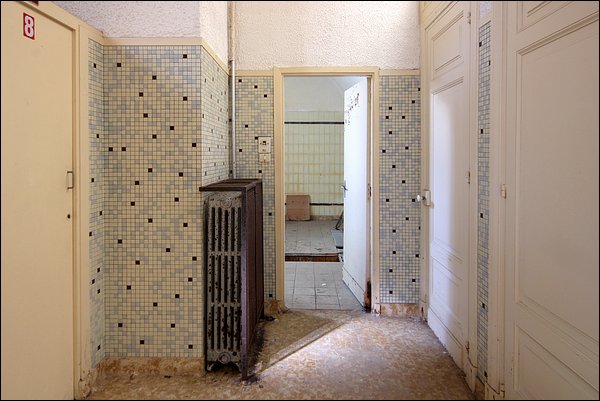
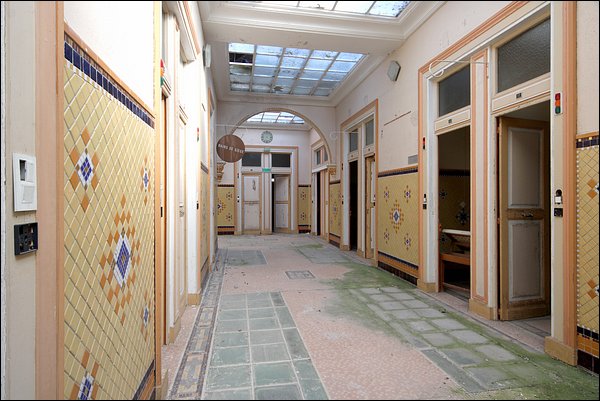
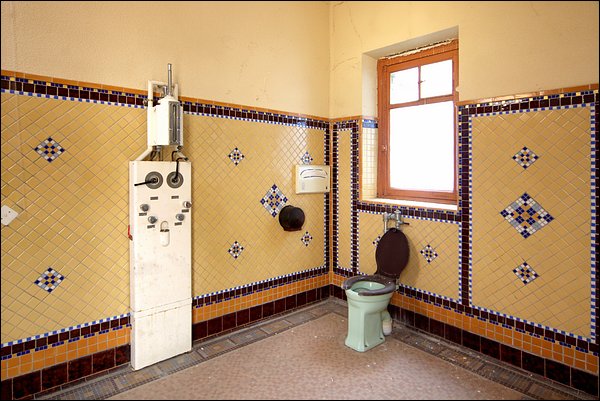
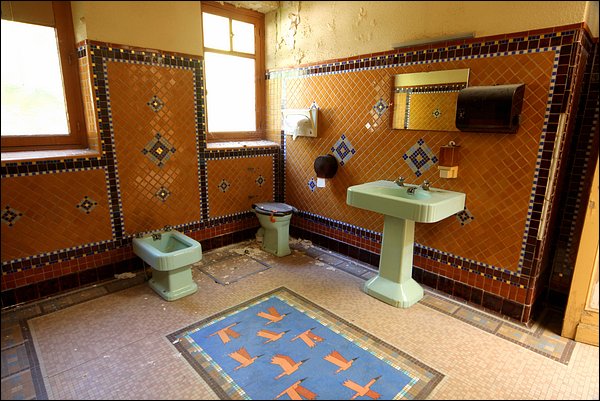
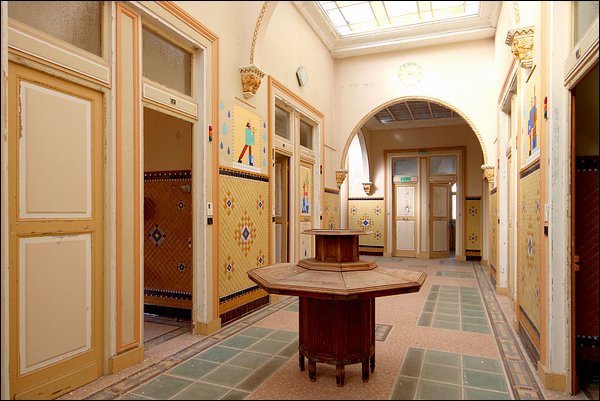
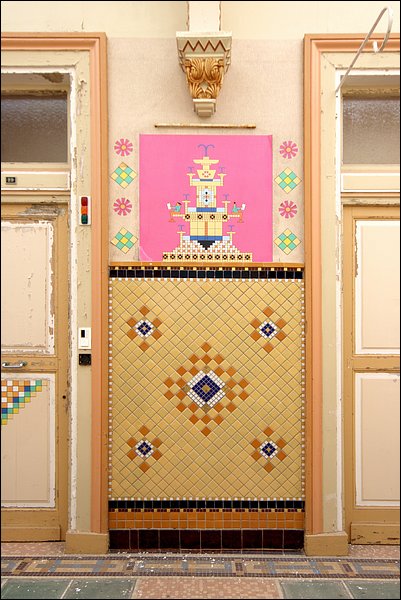
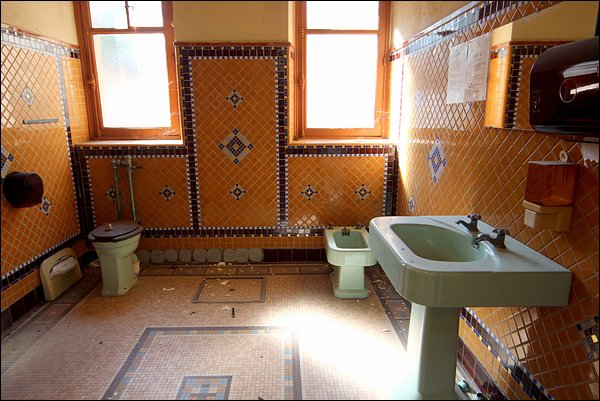
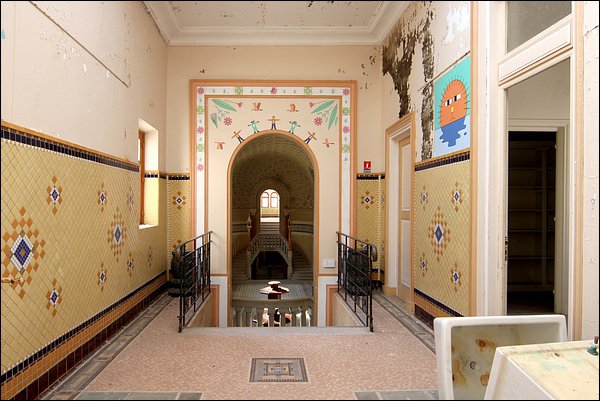
The baths are spread across two levels, forming a large rectangle around the atrium, with dedicated sides for ladies and gentlemen. The areas housing the springs are currently quite bleak, suffering heavily from humidity. Otherwise, the complex consists of changing rooms and treatment cabins. Everything is finished in earthenware mosaics, which are of extraordinary beauty.
The site is currently open to visitors during certain Heritage Days (Journées du Patrimoine). The site is listed on the Supplementary Inventory of Historic Monuments, which is a positive sign. One can only hope that the eventual transformation will not be too destructive to this exceptional relic of the past.