Urban Exploration - Lignite Mines
We received photos from a traveler and compiled them into a historical summary.
Here is a visit to some ancient underground lignite mines. Lignite is a rather poor variety of coal, the richest version being anthracite.
This is a place we had known about for over twenty years; it was part of a kind of personal mythology. To put it simply, we talked about it constantly without ever finding the right opportunity to actually go.
However, a place so mythical in our personal stories does not necessarily make for an exceptional visit. On the contrary, it turned out to be both unwelcoming and disappointing. In some ways, given the information we had received, this was entirely predictable.
We are talking about roughly 80 entrances, totally hidden beneath the brush across a vast hillside. The BRGM (French Geological Survey) maps suggest one thing, but on-site scouting reveals a completely different situation. It's total confusion, showing that the BRGM recorded plans that do not correspond to reality.
In theory, we had a significant length of galleries on paper. The reality on the ground is an anarchy of "hit-or-miss" digging, with galleries intersecting at right angles.
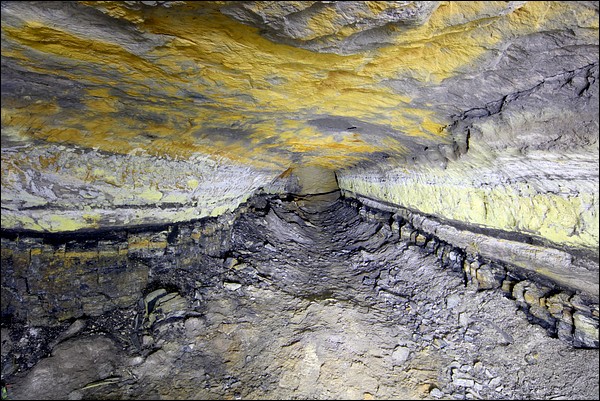
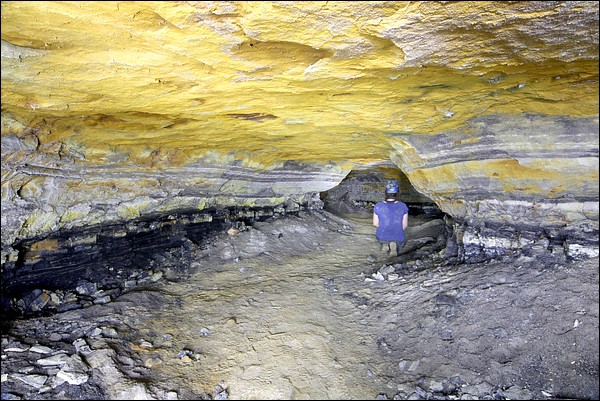
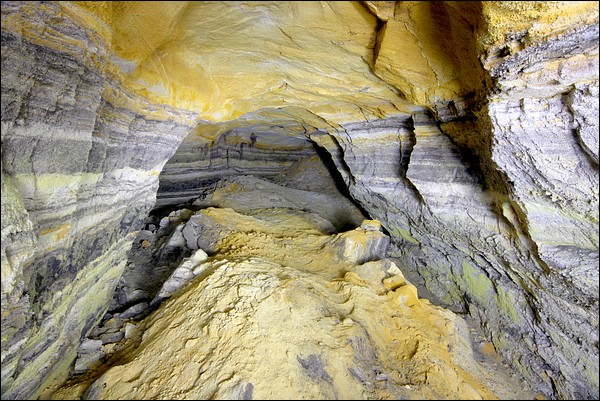
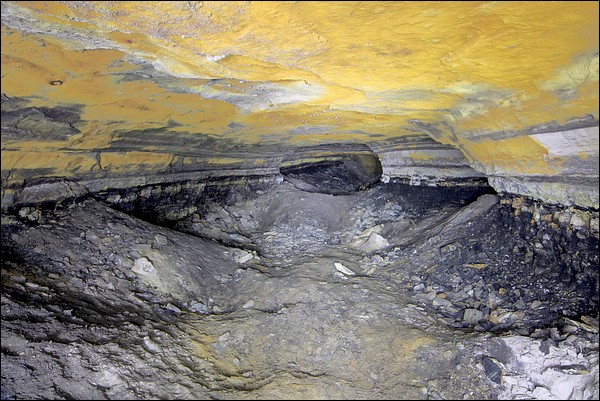
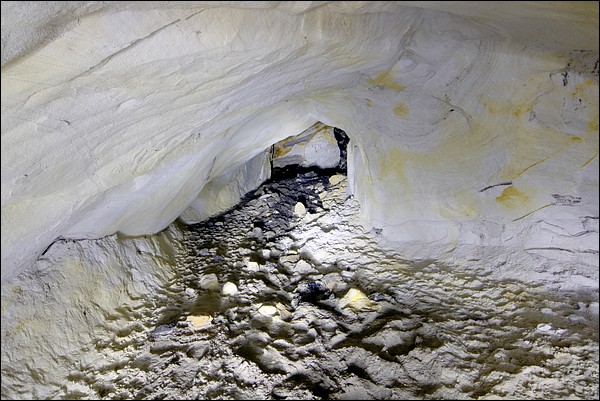
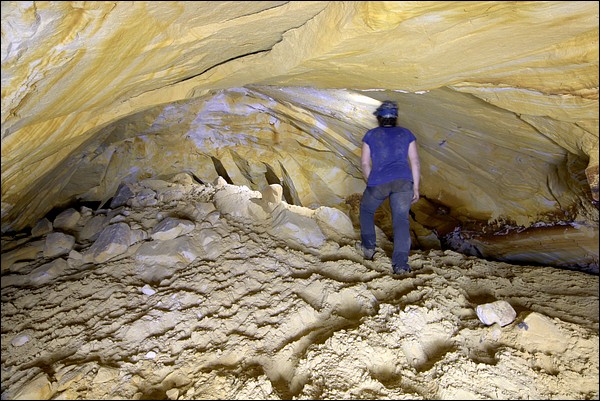
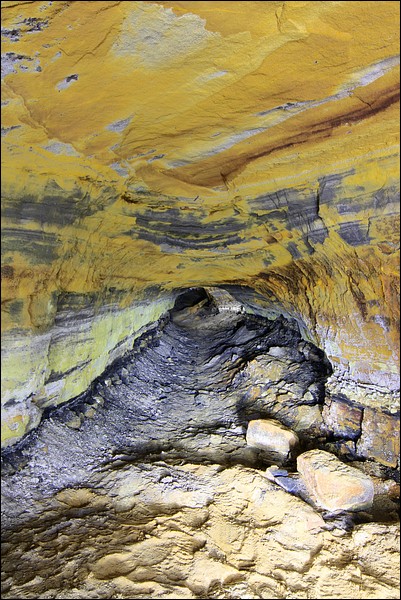
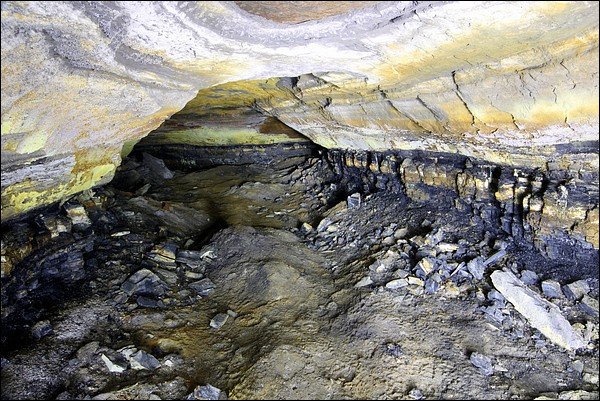
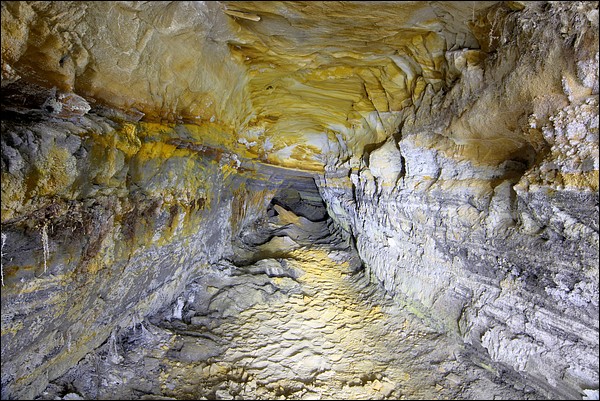
Cave-ins are legion - nearly universal - meaning that today, one navigates through total chaos. The galleries are between 40 cm and a meter high at most. They are dug into sand and are held up by nothing but some unknown magic. Taking a single photo is an almost insurmountable challenge, and the equipment takes a beating.
The photos I am presenting are from a network - the only one, in fact - that is in a less degraded state. It appears on no map.
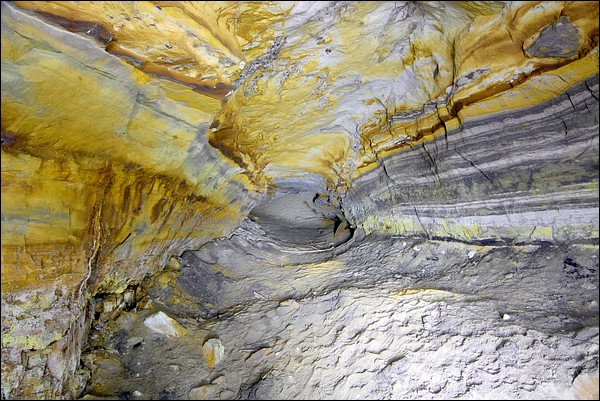
At the very beginning, it's fine and, let's admit it, quite pretty. After an upward section (monterie), the atmosphere becomes confined. It is curiously warmer and more humid. Oxygen levels immediately drop to 17.5%. After a few lower passages, the situation deteriorates further, making any continued visit impossible. Only an exploration during freezing weather outside might improve the ventilation. Even then, it's debatable, as the area is truly confined.
Lignite presents a genuinely complicated equation. A forest fire once devoured the lignite, which continues to smolder deep within the underground networks. Although we didn't see it ourselves, photos exist of galleries belching smoke. What we did see were galleries where the oxygen had been consumed - hardly inviting from a safety standpoint. This aspect, combined with very real cave-ins, leads to the near-conclusion that this place should be strictly avoided.
From a historical perspective, it isn't any better. I was told of medieval mines stretching for kilometers, mostly straight galleries. The truth is an Industrial Revolution-era site dug in total anarchy. Where does the truth lie, or what did we miss? Clearly, we will never know more. What is certain is that the situation twenty years ago is not the one we see today. With the fire, the sands wash away and subsequently clog the galleries. The bare ground allows water to seep through the gallery roofs, weakening them and causing the sand to collapse. It's the end of an era.
Still, the mine we visited is pretty, as the photos show, but in all honesty, it's the only one we know of.
That is the summary of this visit, and admittedly, it doesn't shine with optimism. Its value lies in highlighting a very rarely documented subject and bringing a long-standing story to a close.