Urban exploration - An incursion into the hospital of scales
We received a traveler's photos and his narrative within the forsaken walls, and we have compiled a historical summary from them.
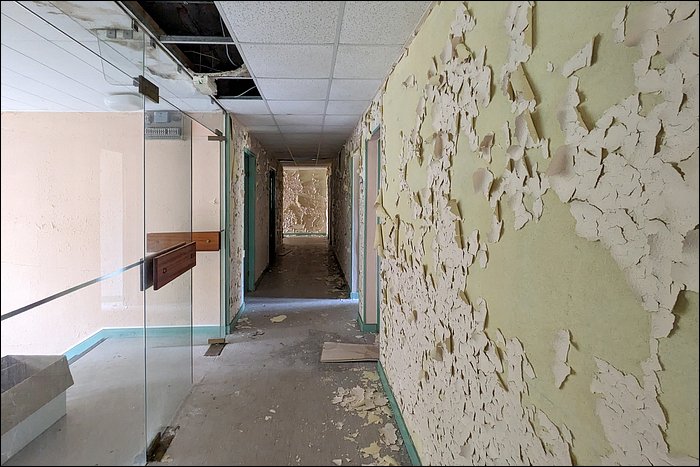
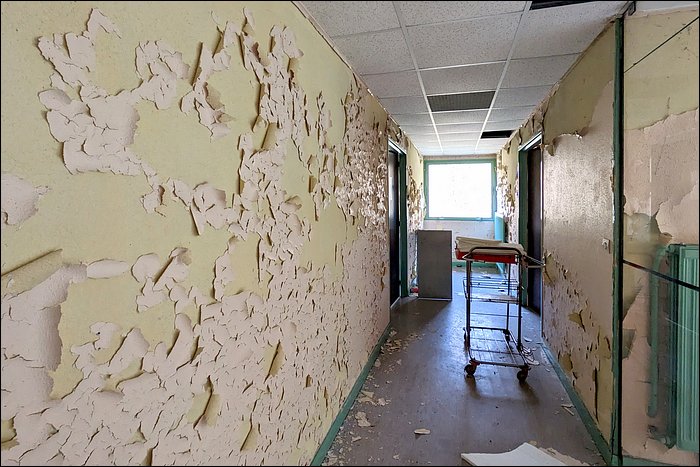
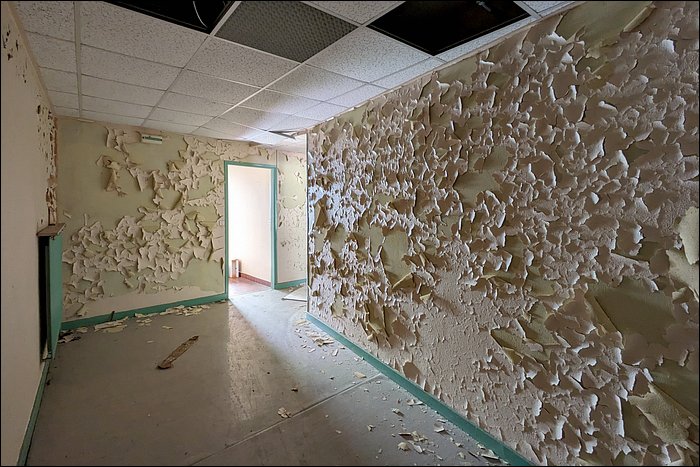
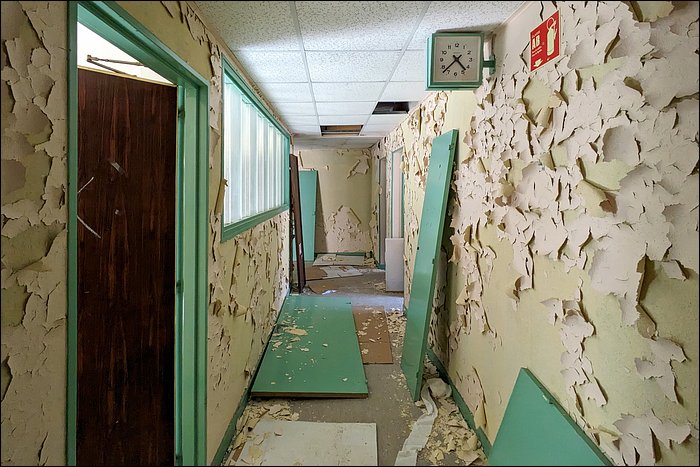
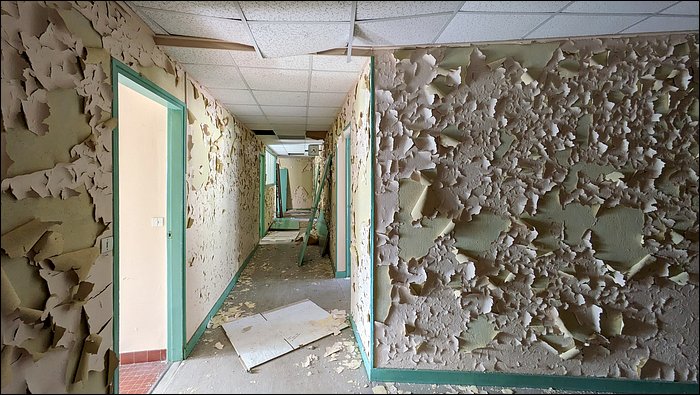
This was, quite purely, what one might describe as a bizarre visit ; in its totality, the experience resided entirely within the realm of the unforeseen and the unexpected. Through this chronicle, we bring you today on an incursion into a former hospital. Regarding its somewhat affectionate moniker, there was a clear hesitation between Hospital 16:38 — the precise moment the final clock ceased its ticking (be it morning or evening ?) — and the Hospital of Scales, in homage to its magnificent peeling paint. Ultimately, the latter choice asserted itself with a certain delicate grace.
From a historical perspective, precise details remain elusive, primarily because the establishment was a relatively minor one from its very inception. While the nearby metropolis boasts a large general hospital, we find ourselves here in a structure dedicated to specialized disciplines — notably the treatment of tuberculosis-related afflictions and, predominantly, diabetology.
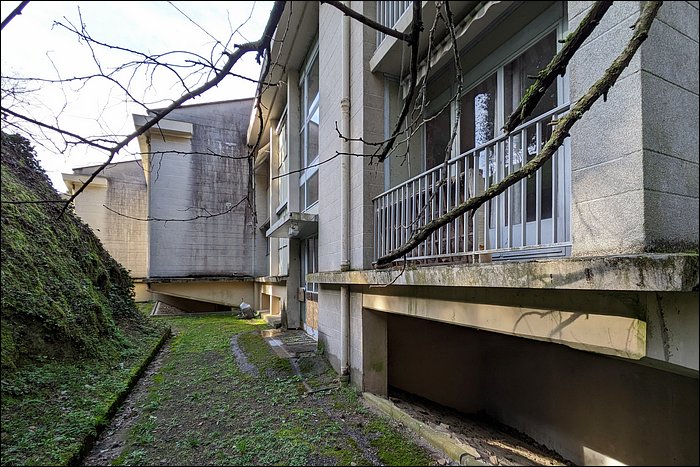
Consequently, the atmosphere does not exude the oppressive, Stalinist weight of a massive medical complex. What we retrace here is a modest site : buildings spaced apart, nestled within a verdant environment. Erected in 1972 as a single coherent project, the site has seen no subsequent remodeling. The architecture stands as a pristine testament to that era.
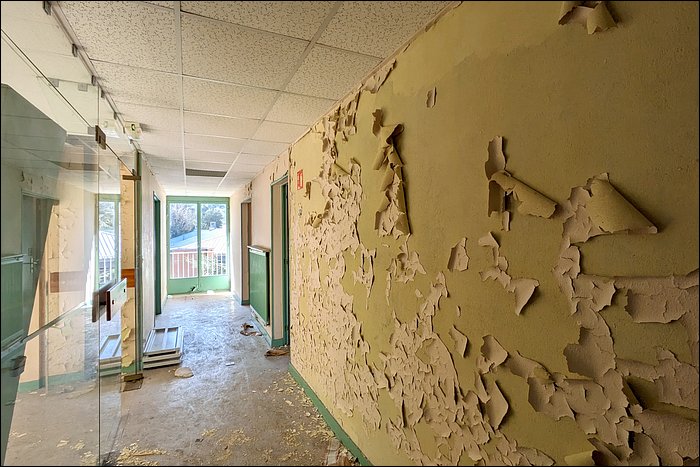
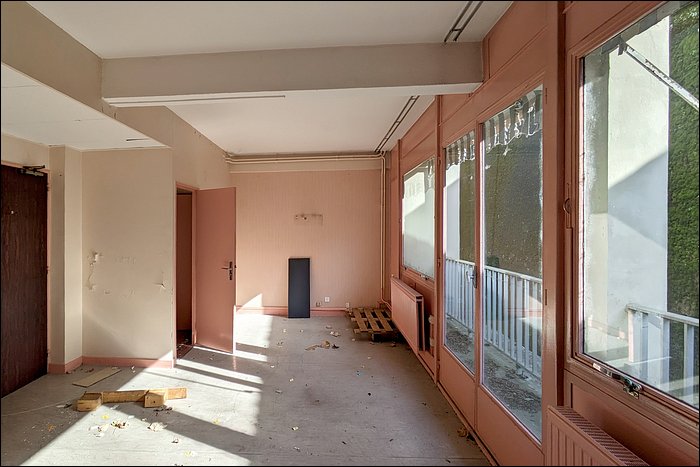
Upon arrival, one of the most striking elements is the somewhat preposterous notion of building on such a site. The slopes are sheer ; thus, implementing medical buildings here was a formidable challenge, and operating them perhaps even more so. A major portion of the structures is built on stilts over abrupt inclines. One might say, without exaggeration, that the front facade sits upon a terrace while the rear is submerged like a cellar.
One could almost mistake it for the architectural framework of a sanatorium. The design, though simple, is ethereal ; the terraces are vast and west-facing, as luminous as they are welcoming. Yet, of sanatoria, there were none ; we are far removed from the era of such architecture.
An unexpected exploration
Urban exploration rarely unfolds as planned ; indeed, that is its very essence, the beating heart of the adventure. Yet, one constant remains : the inevitability of total failure. This usually entails scouting a location with the "one never knows" mindset, only to find the premises renovated, inhabited, utterly demolished, or hermetically sealed — sometimes a surreal mix of all the above. As for us ? We are quite accustomed to it.
Thus, when we set out to visit this site, the mood was predetermined : it would be a resounding failure. Though an informant had piqued our curiosity, the directions were five or six years out of date — the exact date having slipped from memory. We parked the car at the base of the hill ; the day was pleasant, and regardless of the outcome, it promised a lovely stroll. Here again, one can attest that the entire philosophy of urbex rests upon this very stoicism.
Upon reaching the site, it was indeed abandoned, yet our first shock was the sheer height of the walls. The massive retaining structures barred the way — titanic and beautiful all at once. Their permanent shroud of shadow had left them carpeted in moss, achieving a true aesthetic splendor. Nevertheless, we simply skirted through the woods, a task that proved less difficult than anticipated. The walk revealed a building that was, quite frankly, exhausted. Abandoned ? Indubitably.
Then — heavens, gadzooks, and by all that is holy — a major complication : it was open. How so, a complication ? Well, psychologically speaking, one finds oneself caught off guard. Yet the evidence was implacable. An OSB board had been torn away with ineffable violence, the glass behind it shattered. It would have been so much simpler to climb onto a terrace and merely push open one of the French doors ; a symbol of finesse, perhaps, but no — they chose destruction.
Experience has taught us not to prevaricate ; hesitation never, ever yields a positive result. Thus, the explorer has but one recourse : to silence instinctive fears and enter. Beyond the threshold, the journey would not proceed as envisioned.
« 3,6 рентгена. Не отлично, но и не ужасно »
To quote one of my favorite expressions : 3.6 roentgen Not Great, Not Terrible. Soviet Geiger counters peaked at 3.6 ; in reality, the Chernobyl plant was emitting at least 15,000. And what of the Hospital of Scales ? It was a similar tale : a somewhat approximate measurement of danger. Shall we say it was a "smidgen" above the expected level ?
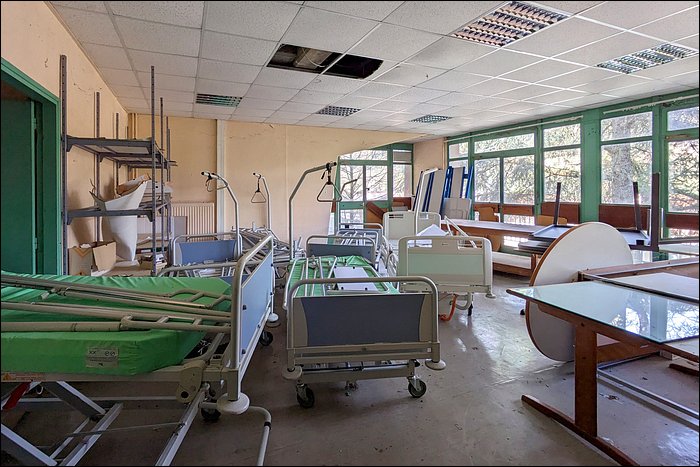
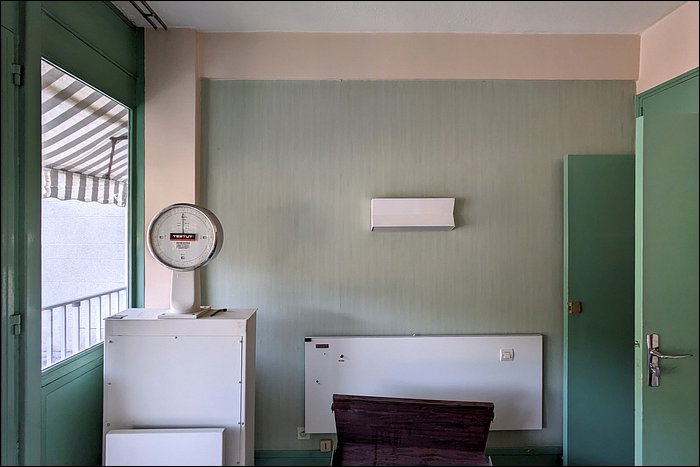
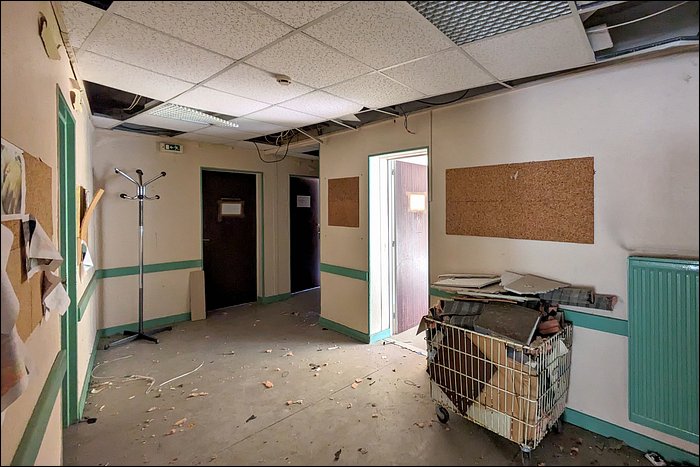
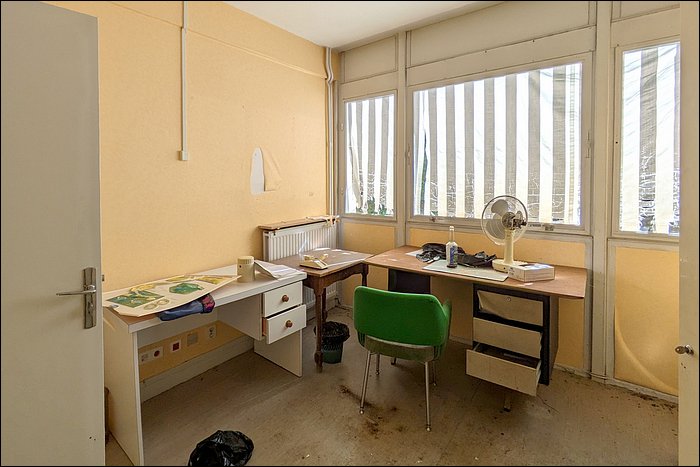
It becomes apparent that the infrastructure served doctors until 2002, or perhaps 2003 for some, before being decommissioned. Subsequently, the premises served as storage for "odds and ends" — beds, pill dispensers, and the like — but above all, mountains of archives. Once gathered (a process of accumulation that can span years), they are palletized, shrink-wrapped, and hauled away for destruction.
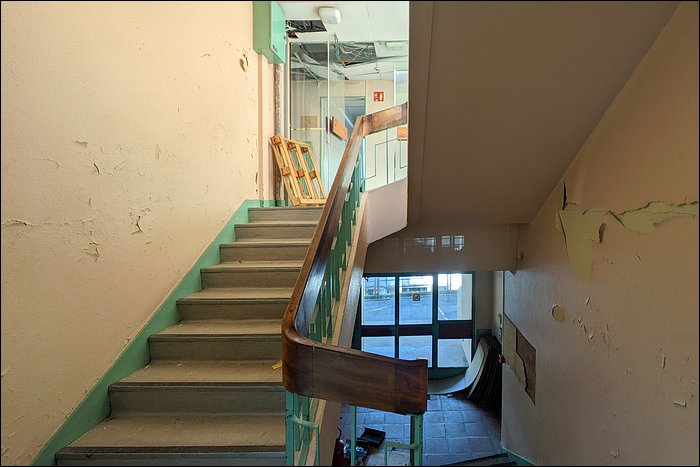
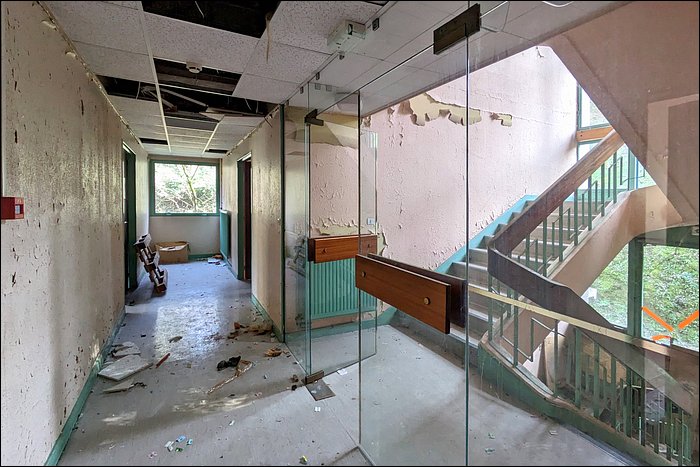
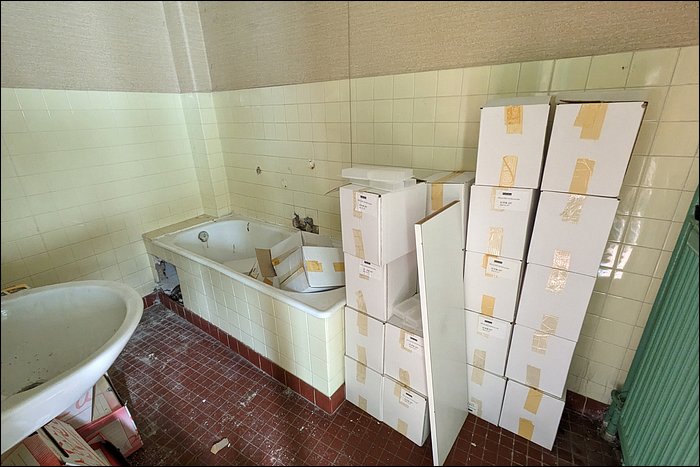
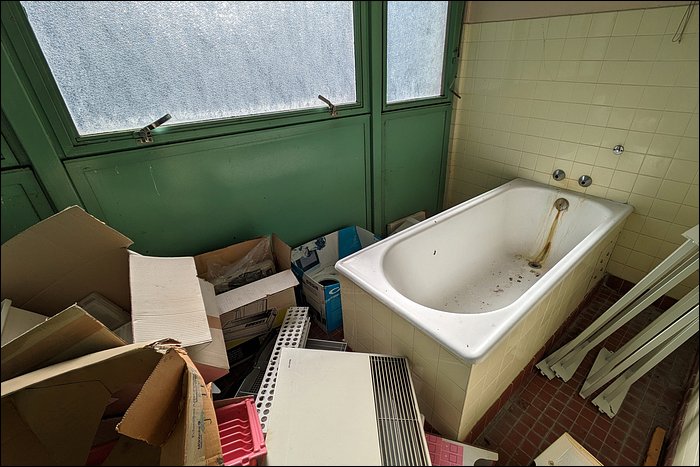
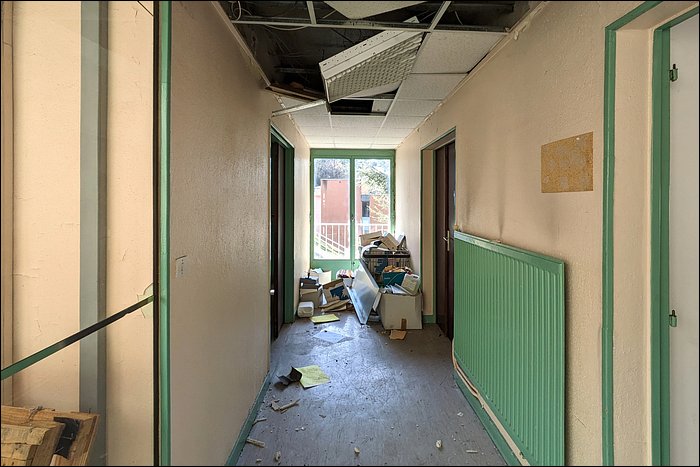
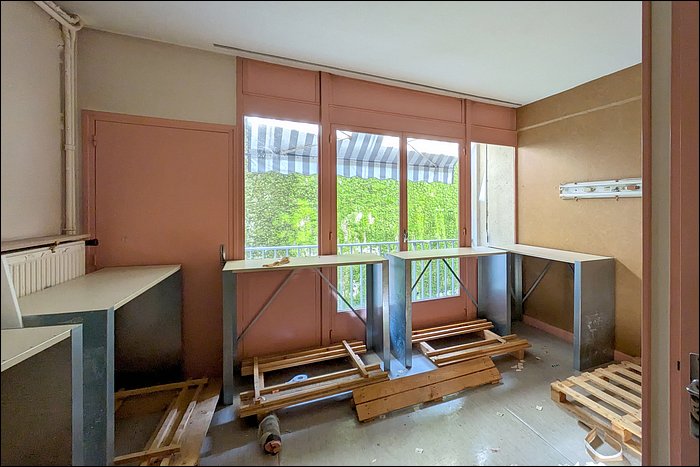
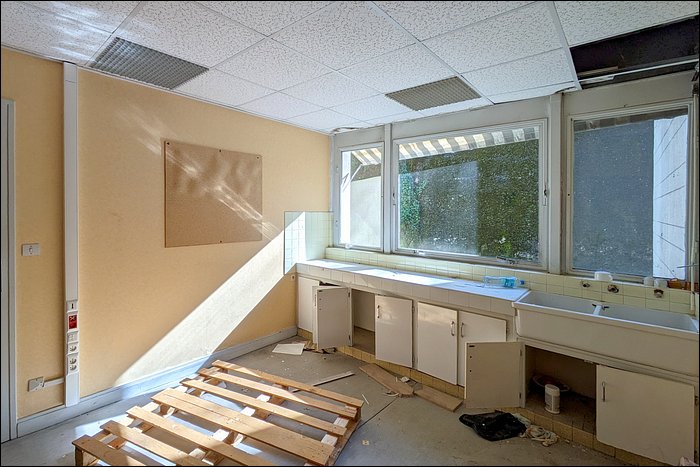
During the exploration, one thing remains clear : the archives are no longer present in vast quantities — at least not on an industrial scale. Scattered boxes appear here and there, but the volume is hardly considerable. On the whole, the building is handsome, evoking a sense of waste. It deserved better — and certainly not such senseless vandalism.
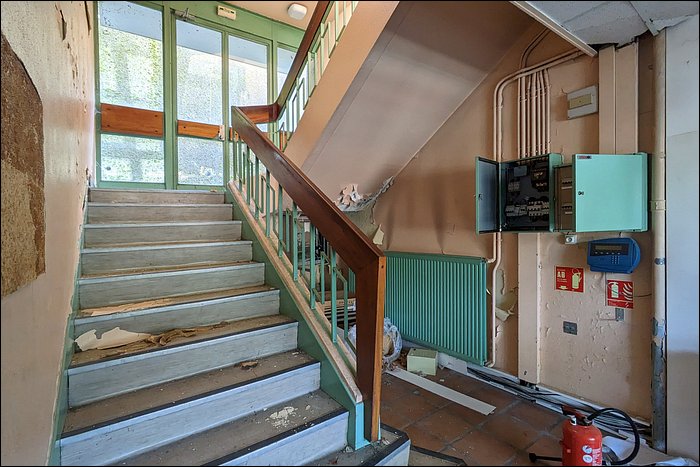
The building is organized across two levels, where the peeling paint possesses a "decay" aesthetic that is, quite frankly, sublime. At the extremities lie two distinct cellars — sub-levels which, as previously noted, feature facades opening onto a bright and pleasant slope. All seemed concluded when suddenly (and it is often with these words that my tales gain their spice).
A great crashing of a door occurred. Could it be outside ? Hard to imagine, for outside there is only slope upon slope upon slope, in short, nothing that slams. The wind ? Non-existent. The doors ? If one thing is undeniably apparent, it is that they are all equipped with door closers — those hydraulic arms that return them to their original position. They are quite stiff, in fact. No door could slam on its own. Then, the sound of voices resonated.
A single sense of urgency took hold : the need to depart post-haste. Finding oneself amidst gynecological archives and an indescribable, yet explicitly named, heap of abortion records would be somewhat difficult to explain with any degree of serenity. While the peeling walls are of no consequence — a harmless pursuit of the aesthetics of decadence — finding oneself knee-deep in the forgotten records of countless procedures feels... slightly less than ideal. Just slightly, shall we say ? You grasp my meaning.
Fortunately, the ordeal ended without drama. Will we ever know the truth ? Doubtless never. Sometimes one cannot fathom the doses of the improbable that are possible : individuals finding themselves at five in the morning in the most derelict corners of the world. Back in 2005, we joyfully sampled this brand of absurdity — noting, of course, that it led to no involuntary abortion for anyone, despite the vexation !
I was delighted to be inside (I'm not talking about the lady, but about the hospital), and quite delighted to have emerged. The feeling is crystalline : one must never return. Regardless, the discovery of those peeling walls, so remarkably aesthetic, was a feast for the eyes. Is there nothing else to see there ? Oh, almost certainly, but it was, in any event, a magnificent discovery.