Forgotten Destiny – The Maugé house
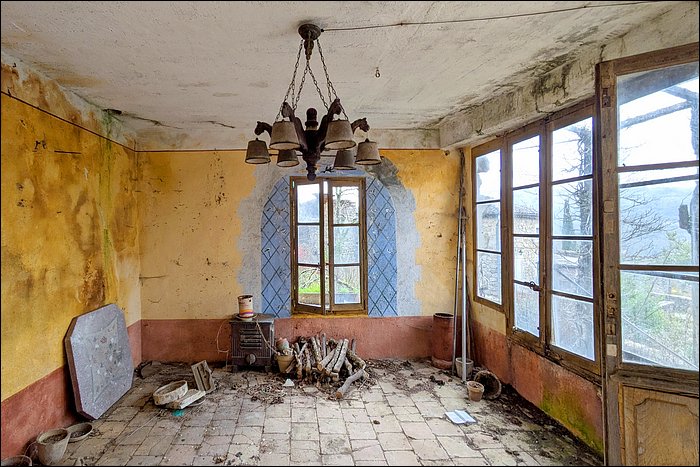
The abandoned Maugé house was, above all, a story of great patience—for them and for me. This is the account of a visit to a place that certainly gave me a run for my money.
It often starts like this: Google Maps betrays a smashed-in roof and an invasion of vegetation. When you add critical details like "no vehicle access" and scattered clutter, the omens start looking good. That’s how this house ended up on an endless list: the one for "thingamajigs" to see one of these days when passing through the area.
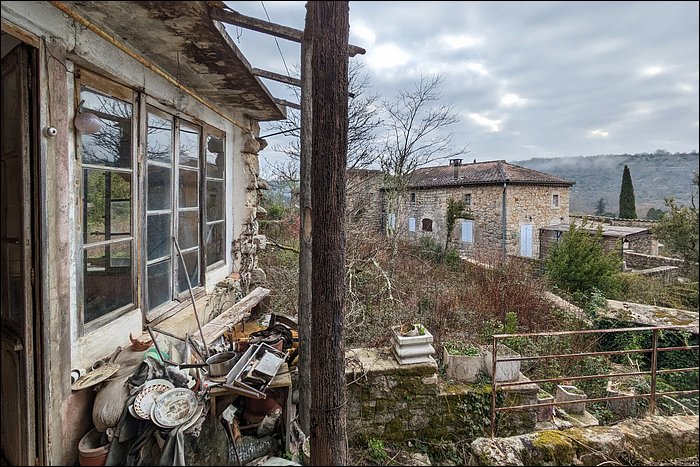
The house isn't particularly remote, but once on-site, its potential seems much lower—oh, how often is that the case! But well, that’s the game. On the ground, a caravan and a sort of abandoned construction site suggest there’s nothing to expect. But that’s not even the worst of it; it’s the mountain of brambles. They are as thick as multi-centennial oaks.
As a pedagogical friend of mine would say: here I am, "going Fanny" (finishing with zero points). It’s been a year; it’s June, the tourist season is in full swing, and the sun is blazing. I’m in sandals (wonderful choice for urbex, truly), so the only reasonable thing to do is postpone. No matter, things don't seem to be changing much there. Anyway, October rolls around and it’s still impassable; the brambles are as stubborn as a misunderstood little dog. With time, the whole thing naturally drifts into complete oblivion.
Recently, I went to scout a half-maybe-abandoned castle (a failure), and suddenly, while on the road, I pulled a near-U-turn. "Wait, what if I went to check on the bramble house?" It’s late February; I’ve got heavy boots and an improvised urge for a showdown. The verdict? Well, my friend, I’m in!
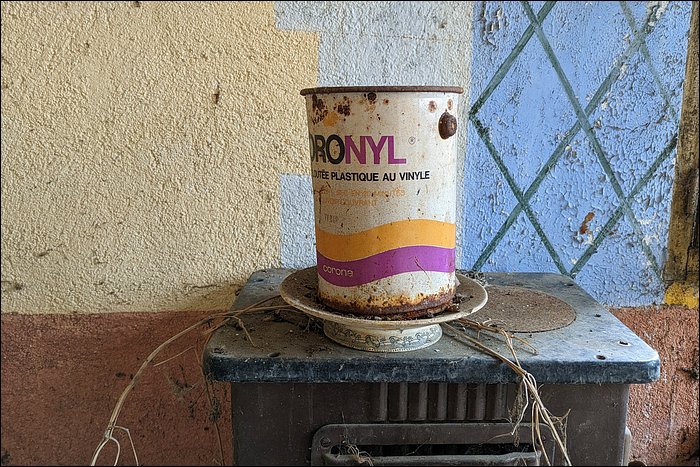
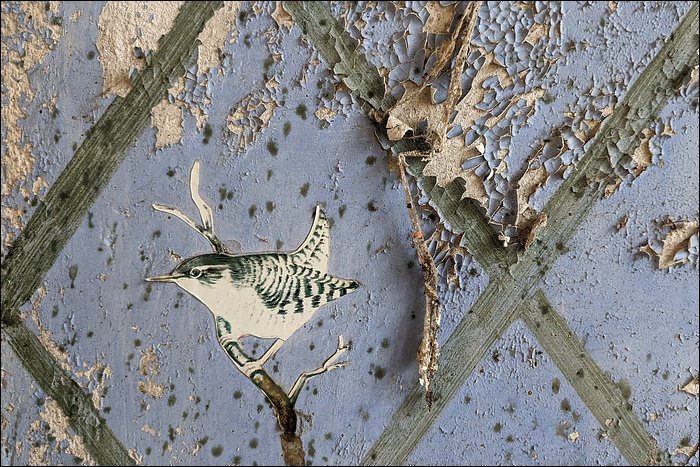
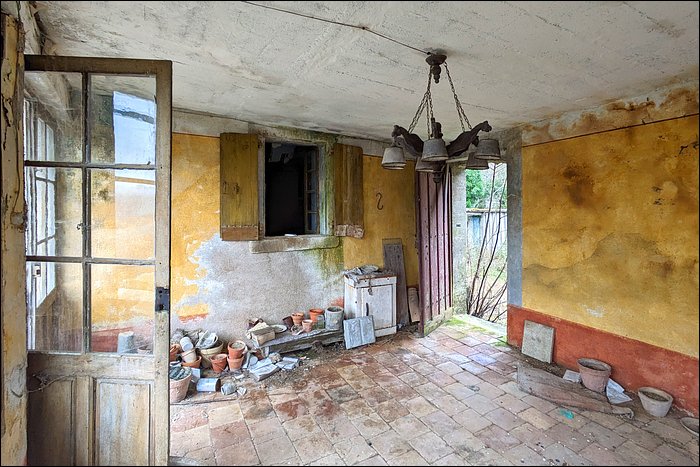
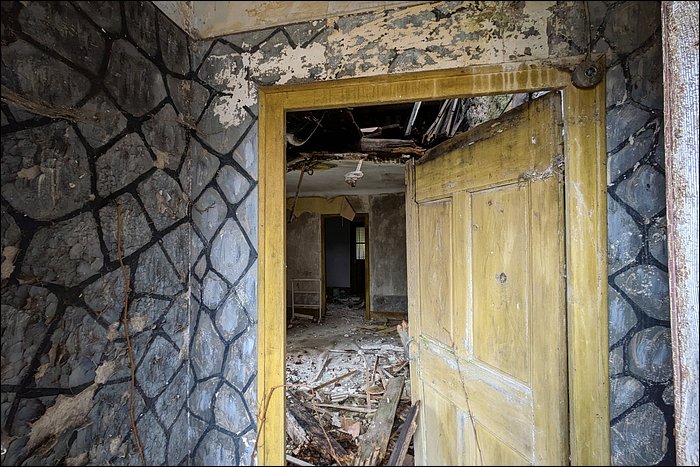
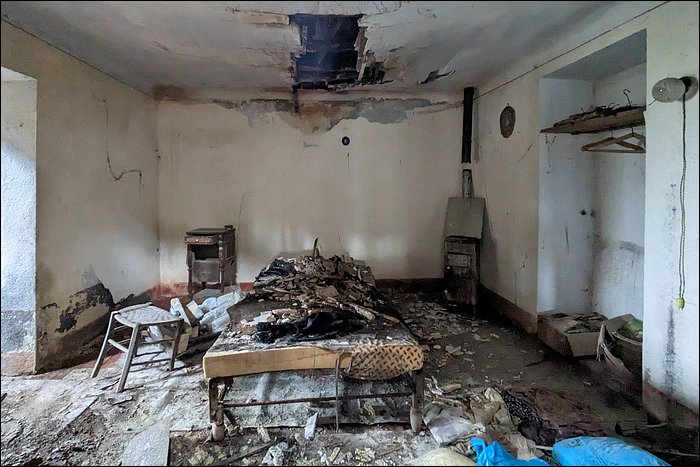
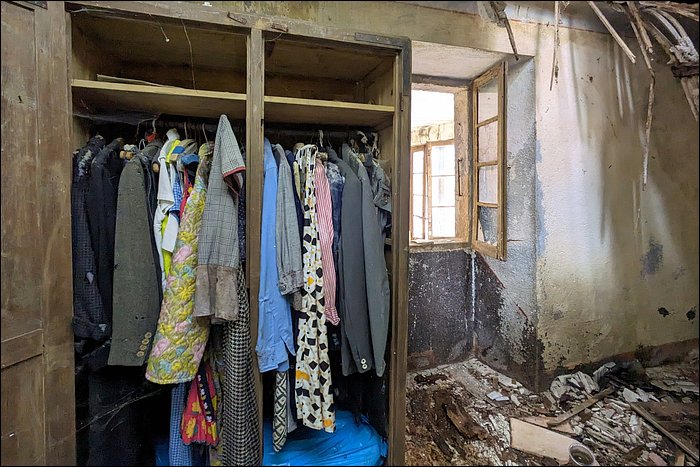
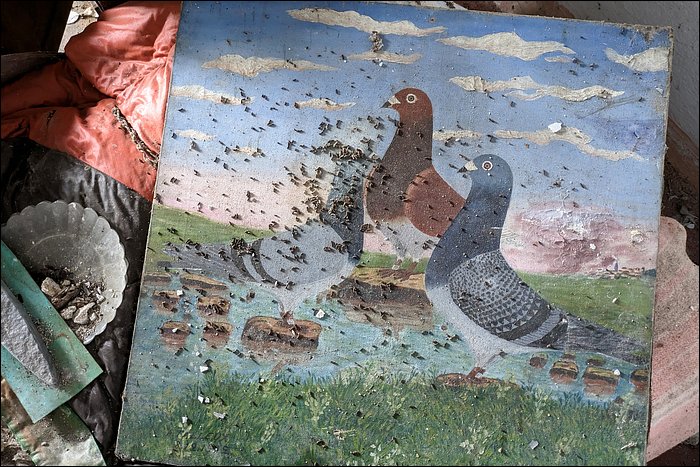
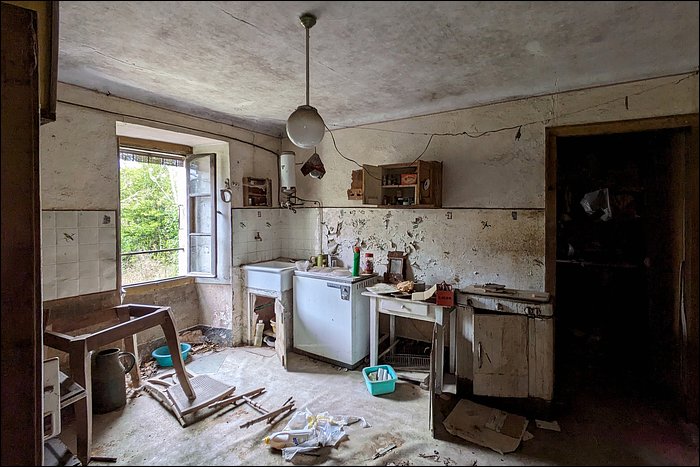
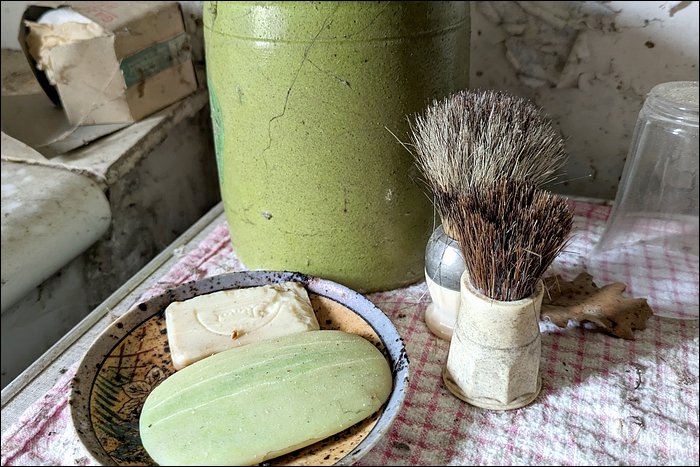
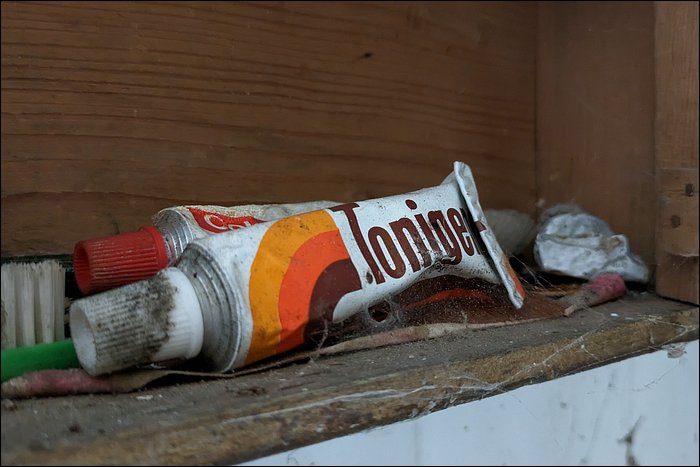
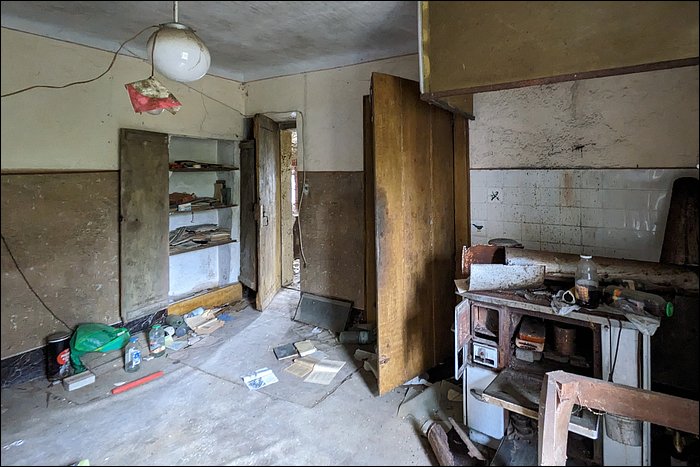
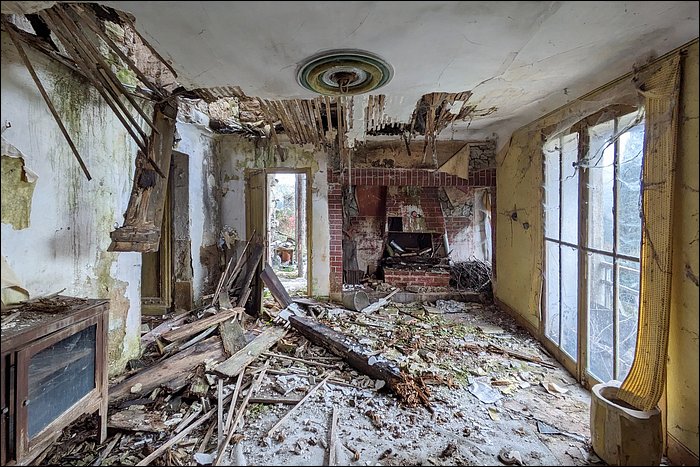
Inside, it’s a ruin of a ruin of a ruin. How can I put it... "tired"? That’s an understatement. It’s exhausted, if not collapsing like the morale of the aforementioned misunderstood dog. As for the looting, it smells like 40 years of open access in a corner where everything seems peaceful. Yet, sometimes, happiness is found in the details.
An unclaimed property with a forgotten destiny
There is no longer a mailbox with the inhabitants' names; no proper access road remains. The gate is barred and opens onto a neighbor’s house. The driveway that likely served as a passage is now an Amazon of happy, near-supercharged brambles. In the absence of a dog with slightly scorned sensitivities, I guarantee you the thorny plants have excellent morale.
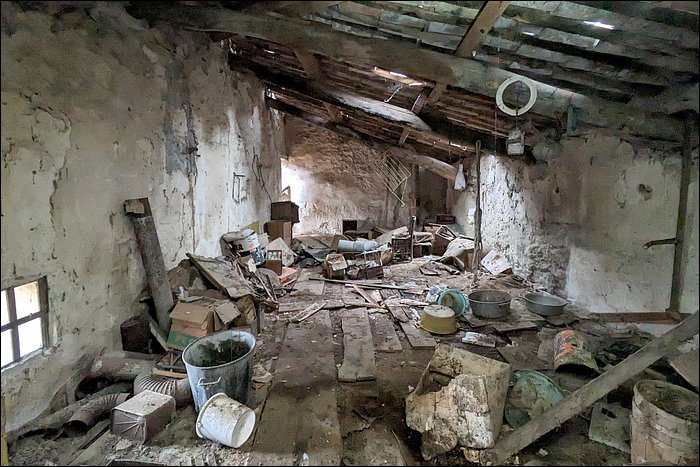
As is often the case, you have to persist where no one else goes. The attic beckons, but it is undoubtedly treacherous. It’s collapsing on its own, so with a guy on top of it (a bit of a fool, at that), we all know how that ends. To avoid "going sideways," I use the weight-distribution method. I lie down in the filth and, stretching my arm to the limit, manage to retrieve a sort of turbo-mega-filthy cardboard bucket. It promised papers.
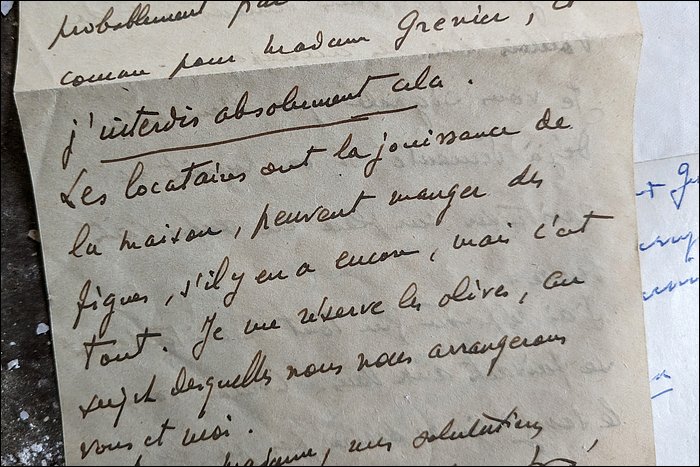
Inside, bingo: letters from 1955, names—it was everything I needed.
The house belonged to Paul MAUGÉ and Marie MAUGÉ (née VELAY). With a detail bordering on surgical obsession, I’ll provide some genealogical info—limited, so as not to make the text indigestible. Paul was born on February 16, 1896, in Saint-Ambroix (Gard). He passed away in December 1978 in Le Roussillon, Les Vans.
His wife, Marie, was born on June 21, 1901, in Nîmes. She passed away on August 13, 1982, in Le Roussillon, Les Vans. They married on June 2, 1923, in Saint-Quentin (Aisne). What were they doing up there? That mystery remains theirs. In any case, no children were born of their union. They had family in Saint-Ambroix, the Vincents. It was she who wrote, mostly. Having become children of the soil, he was a mason, and she was an embroiderer. On paper, these were simple lives in a peaceful corner of the countryside.
When a haven of peace turns into hell
Because the house we are visiting isn't just "one" house. As is often the case in the Ardèche Cévennes, homes are tightly clustered in odd, inconvenient pockets, while all around there is "turbo-nothing." (If you want to understand why Malarce-sur-la-Thines is such a den of pure eccentrics, the urban planning is one of the ingredients—not the only one, granted).
The Maugé house was bought in 1954. As is common in this land of goat herders, surveyor precision wasn't the primary concern of the folks you see in these hamlets. In 1963, a certain Germain Mesclon arrived and had a section adjoining the Maugé house renovated or built. Everything is squeezed together, held up by habit. Except that the property lines, argued over by everyone, were not respected at all.
An endless confrontation ensued. 1964: conflict before the Justice of the Peace in Les Vans, conciliation, failure to respect conciliation. 1965: trial in Largentière. 1966: appeal. 1967: high court in Paris. Paul Maugé lost his case and was ordered to pay costs. Meanwhile, a Miss Brun moved in, and by 1967, she was draining her roof water onto the Maugé property, which became heavily damaged by dampness. Another trial... a "simple and peaceful life," we said?
According to the scraps found—less precise as they refer to letters rather than administrative documents—the Mesclon and Brun parties eventually cleared out, leaving the Maugés to buy the other two houses. Consequently, the three shapeless dwellings became one, the current one, which explains the building’s somewhat odd and "DIY" silhouette.
Furthermore—and this is where it gets spicy—the house sits right on the corner of a municipal border forming a right angle; more precisely, the house is the border. Paul and Marie received their mail in the wrong town. The aforementioned caravan and the semi-abandoned construction site? That’s another plot of land; it has nothing to do with it.
Honoring the memory of the forgotten
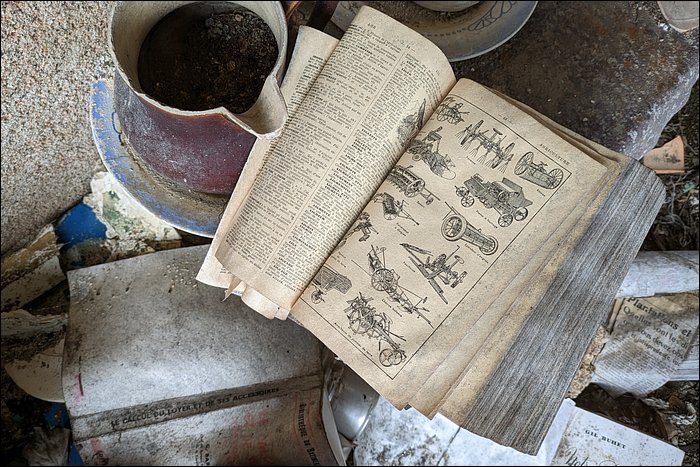
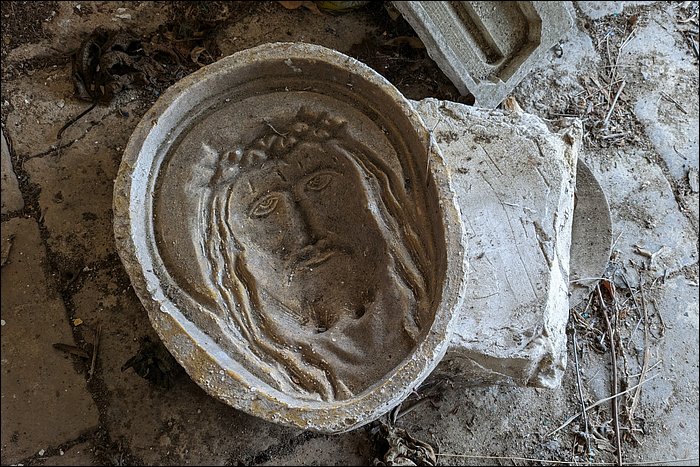
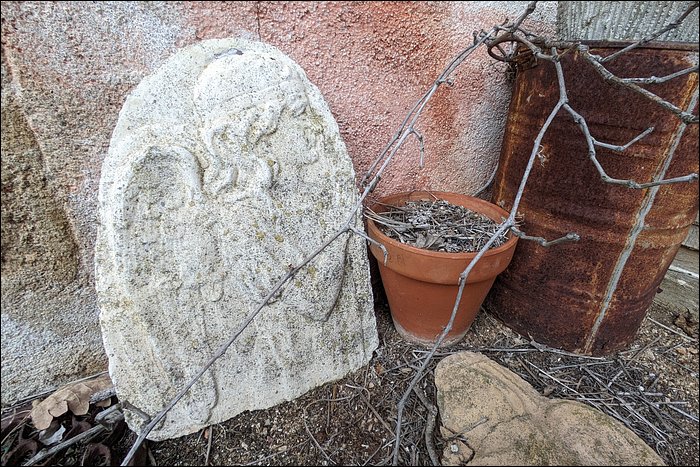
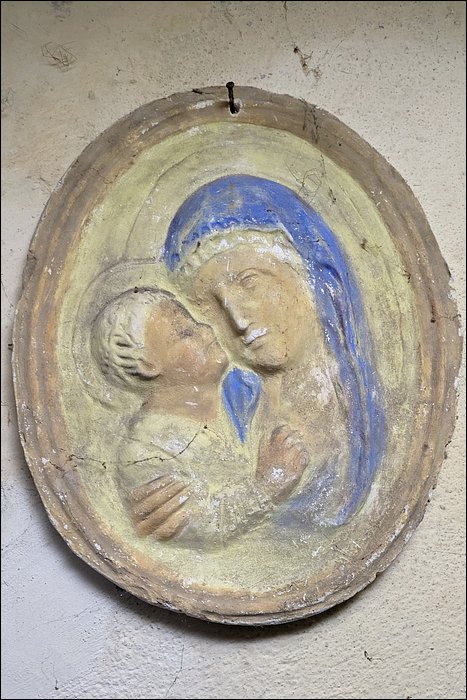
We will—definitively—find no photos of the couple. Deeply Catholic, they were devoted to God in their daily lives. She, the seamstress, read the Gospels. A worn book contains the terms for gathering "the precious"—they are prayers. He enjoyed casting plaster figures, all religious, sometimes talented, other times uncertain. He even made the negatives himself. It gives a curious feeling to unearth a treasure in the ruins.
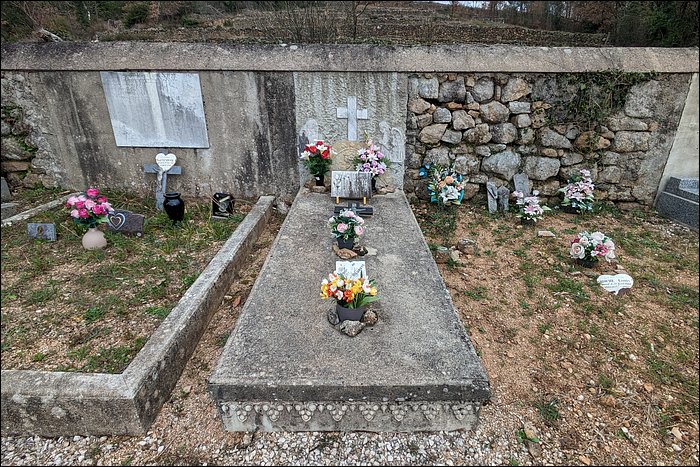
So, I headed to the cemetery on a pale, bleak morning to find them. Oh, it’s not Père Lachaise—sixty graves at most. I couldn't find them. Let’s just say I was frustrated, playing the part of the "scorned dog" myself. A few lines were exchanged over the phone, a friend quickly checked the directories, and the verdict came in: we have nothing. Somehow, we almost expected it.
Without much hope, I went to the neighboring town, telling myself, "Heck, it’s only 40 graves, it’ll be quick." I ran into the former baker: "Ah, it's you, the bell guy!" Then the cemetery, just to get it over with. It was going to be "house wins" if I didn't find them. And then the miracle happened: Marie and Paul were there. Logical. If you stick to a strict definition of municipal limits, I hadn't been in the right one.
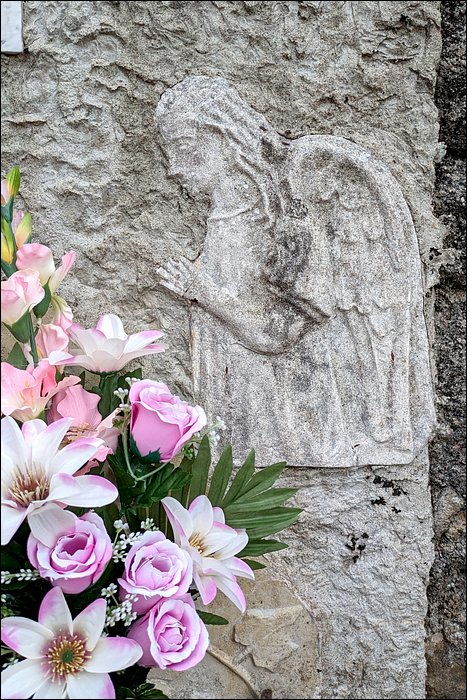
The grave needs serious maintenance; that’s the first thing it tells you: everything is overturned and soiled. But above all, it reflects the couple. The headstone features a floral cement casting, two cherub castings. The base has floral moldings, like artichokes. Care taken even in their final resting place!
The house rots in a putrid abandonment. So many conflicts for it to become this? And if, in the end, it was a common fate for buildings marked by this history of malformed layers?
Is the house worth seeing? No, it’s a ruin, there’s nothing there. But in return, something very strong emerges: there is never + never + never anyone in there. The access is simply a dealbreaker. Leave it for just one month and spring will take joy in creating mounds of tentacled thorns. The feeling I had? Paul, Marie, and I were waiting for each other. "It will be a long wait," they must have told themselves. I am starting the process to restore their grave. Like an appointment that was simply waiting for its time.