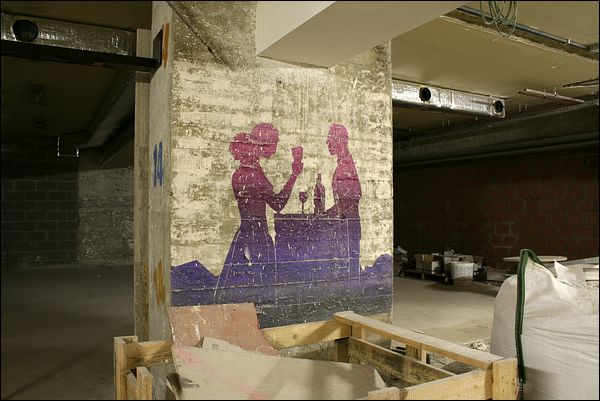
The underground labyrinths of Brussels Central station

Today, we are embarking on a completely unusual exploration: an infiltration into the technical service tunnels of Brussels Central Station. It's only with Sylvain that such extremes can be reached; you will never see these kinds of photos anywhere else, as the site is classified as so inaccessible and sensitive. This is the busiest station in the country.
We are deep in the heart of the North-South Junction, a railway tunnel that traverses the entire capital from north to south. This tunnel represents the densest railway infrastructure in the world - 1,200 trains per day on just 6 tracks - directly linking Brussels-South (Midi) and Brussels-North stations.
It is an "ultra-inaccessible" railway tunnel for pedestrians, roughly 2 km long, dug beneath Brussels' historic center. It begins roughly after Brussels-Chapel station (near the Marolles district) and runs north, passing under Central and Congress stations. This six-track tunnel, featuring three double bores, was commissioned in 1952 after decades of construction; it is considered one of the busiest underground railway sections in the world.
This tunnel allows all trains (ICE, Thalys/Eurostar, InterCity, S-trains, etc.) to cross Brussels from end to end without a transfer, connecting the southern and northern networks of Belgium and Europe. Before its construction, travelers had to change stations within the city, which made journeys incredibly complex. The Junction also allowed for the creation of surface boulevards (Pachéco, de l'Impératrice, etc.) by covering the railway trench. It is truly the backbone of the Belgian rail network: one in three trains passes through it every day.
The exceptional density of technical galleries along the North-South Junction tunnel is staggering. I had spotted this during the junction's anniversary in 2002. But how to pull off a "crazy" infiltration there? That shows you just how long it took to plan!
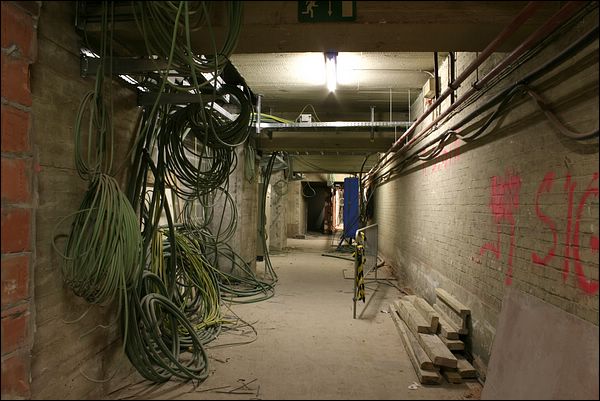
These galleries house a massive amount of vital equipment: High and low voltage electrical cabling, power supplies for trains, signaling, and lighting, telecommunications and control cables, drainage and pumping systems (the tunnel passes under a formerly marshy area near the vaulted Senne river), maintenance walkways.
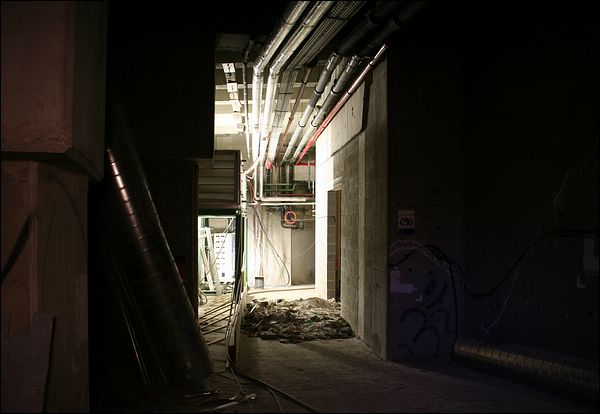
Because the Junction is such a critical bottleneck, leaving these facilities on the surface or in scattered locations was unthinkable: everything had to be concentrated, protected, and accessible without interrupting traffic. The second major reason is linked to modern safety requirements for a high-traffic tunnel. Ventilation and smoke extraction require extensive ducts and turbines, which were recently renewed as the original 1950s installations had become obsolete. In case of fire or an incident (like the one in 2017 at Central Station), rapid evacuation routes for staff and emergency services, fire-rated partitioning, detectors, and extinguishing systems are mandatory.
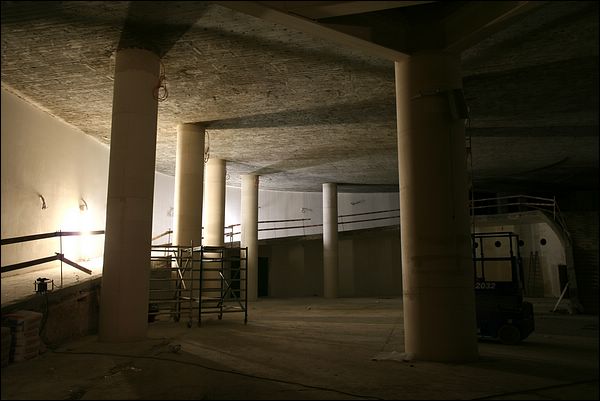
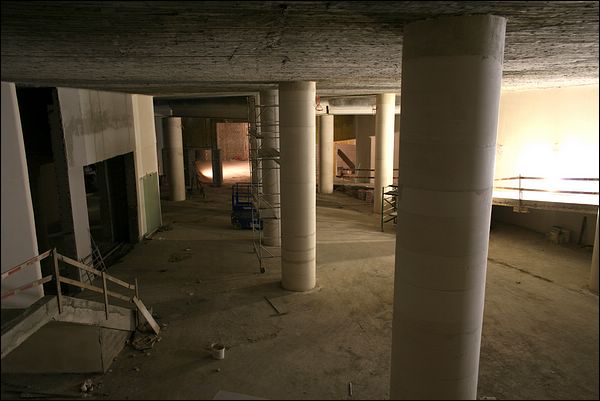
All these constraints led Infrabel to multiply and expand these galleries during various modernizations (notably between 2010 and 2022), creating a literal underground labyrinth parallel to the tracks. It is typical of heavily congested old railway tunnels in Europe: the lack of space for new tracks is compensated for by the extreme densification of underground technical infrastructure.
Infiltrating these technical galleries at night provides a very specific sensation - a mix of pure stress, oppression, and a strange sense of luck to be in such an ultra-strategic location. You are "almost" in the same spot as millions of commuters, yet in a daring move, you find yourself in a dark, damp parallel world of raw concrete or century-old brick walls, lit only by your headlamp.
The noise is omnipresent and deafening: the dull, incessant roar of trains passing just meters away on the six main tracks (especially at night, when Thalys and ICE trains fly by at full speed), the vibrations echoing in your bones, the whistle of air in the ventilation shafts, and the ever-present fear of getting caught in such a "crazy" spot.
It's like being inside a living, albeit terrifying, giant machine: everything shakes, everything resonates, and you feel physically tiny against this critical infrastructure supporting thousands of tons of moving metal. The atmosphere is oppressive and paranoid; the galleries are a true maze with cables hanging like veins and metal doors - some locked, some ajar - opening onto technical voids filled with humming electrical panels.
Cameras, motion sensors, and reinforced night patrols make every step incredibly tense. Looking back once you're out, you realize you were literally sneaking under the historic heart of Brussels, just steps away from tourists sleeping on the surface. It is an experience of total transgression that stays with you for a lifetime.