Urban exploration - Marielle's house
The following is a brief exploration of Maison Marielle, an urban exploration site nestled within a modest village in the Gard department, in France. We extend our gratitude to La Louve for providing the necessary context regarding this location. From the perspective of "familial archaeology," our observations shall remain brief - mere scraps of information, as it were. Indeed, at the very outset of our investigation, it became apparent within minutes that we were dealing with living souls. To put it simply: of the three protagonists involved, none have passed away.
To delve further into their history would have bordered on the intrusive. Out of discretion and respect, we refrained from contacting these individuals. This documentary will thus limit itself to the mention of first names.
It is a somber, rainy day. For weeks now, our southern landscapes have succumbed to a Parisian drizzle - a "Rasputitsa" of sorts. Our morale is leaden, as though we had endured the gloom of the Donbass for half a century; though, naturally, we are in no way prone to hyperbole or exaggeration. A brief lull in the weather finally permits us to venture outside - a true blessing.
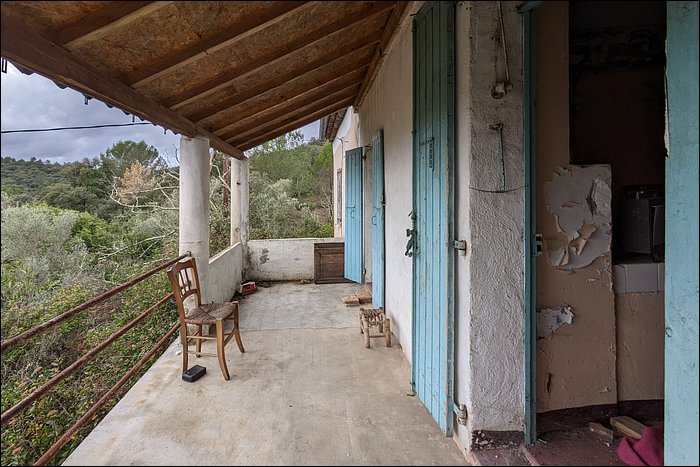
Along a road that proves rather busy, a discreet path leads up to the house, which sits significantly back within the scrubland (garrigue). The asphalt driveway, once of high quality, is now partially shattered, strewn with small rocks, and - most notably - heavily trampled by wild boar. One particular area reveals tree trunks entirely stripped of their bark and soiled by clinging mud. This passage is recent. The house stands with all doors and windows agape, in a state of extremely virulent abandonment.
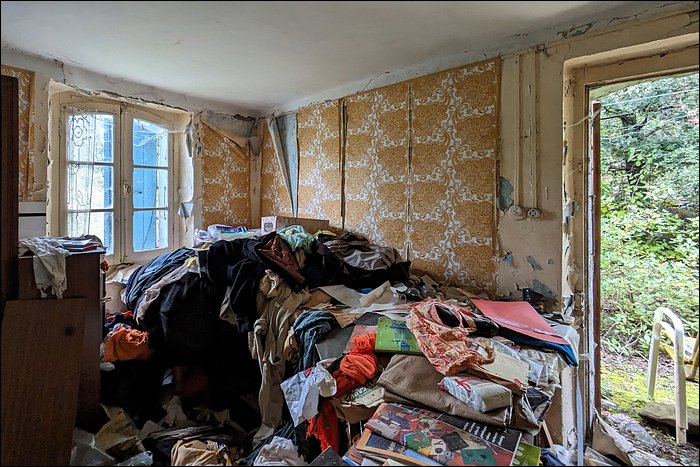
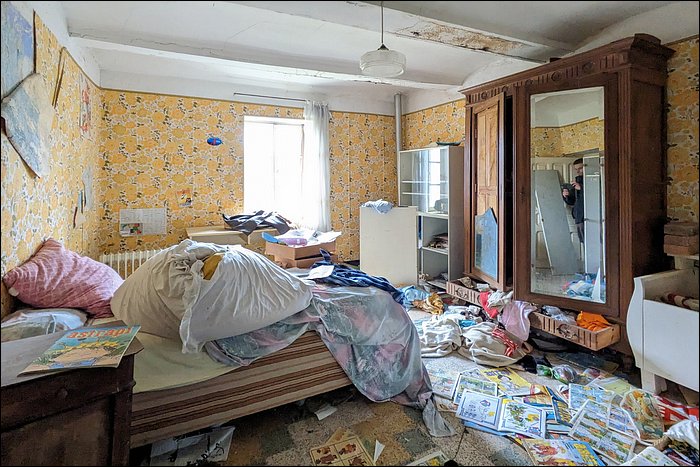
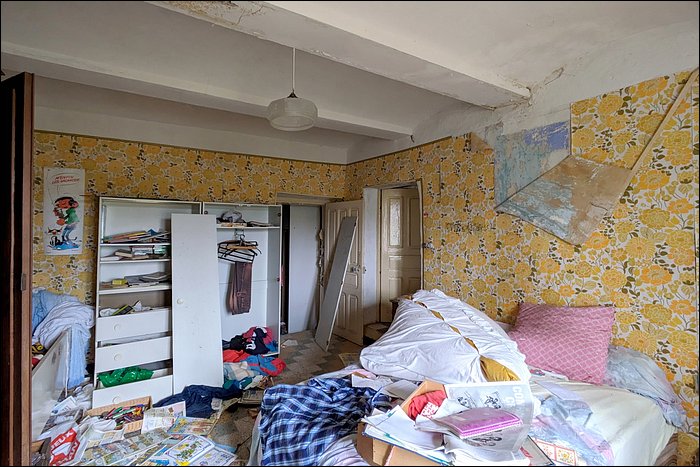
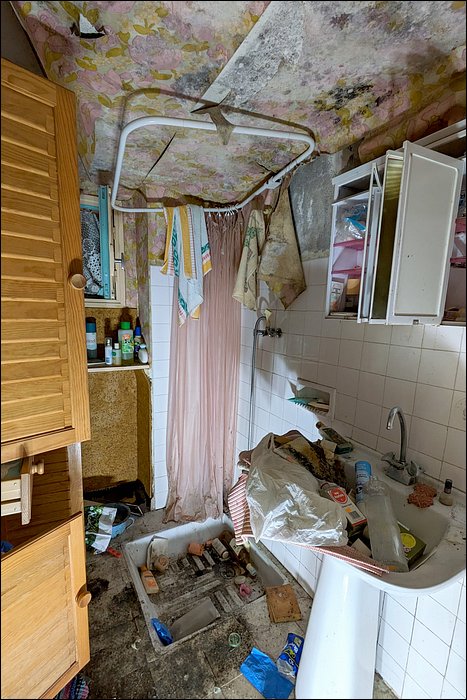
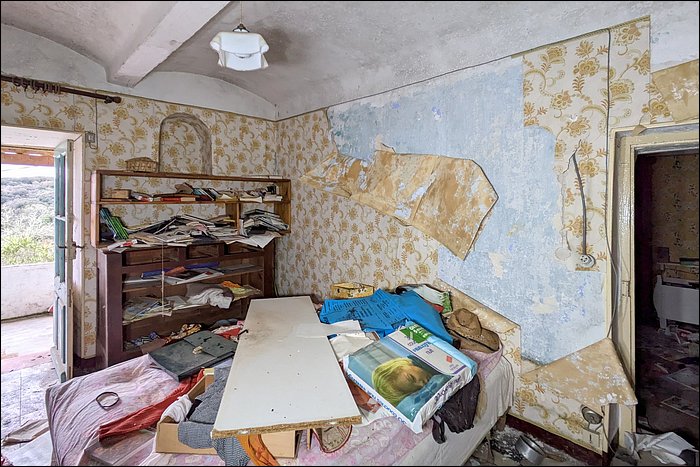
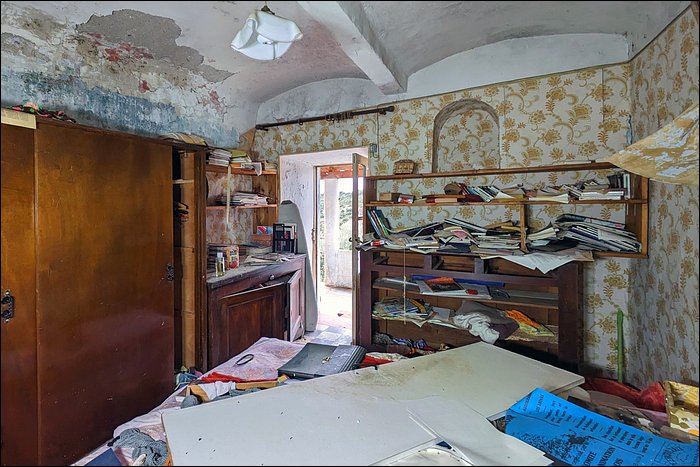
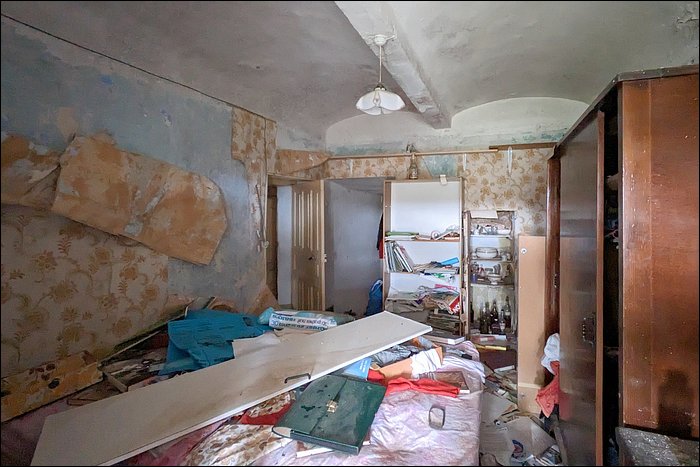
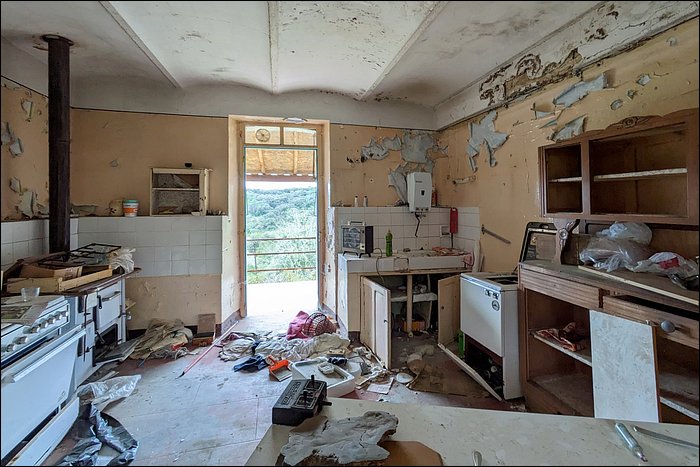
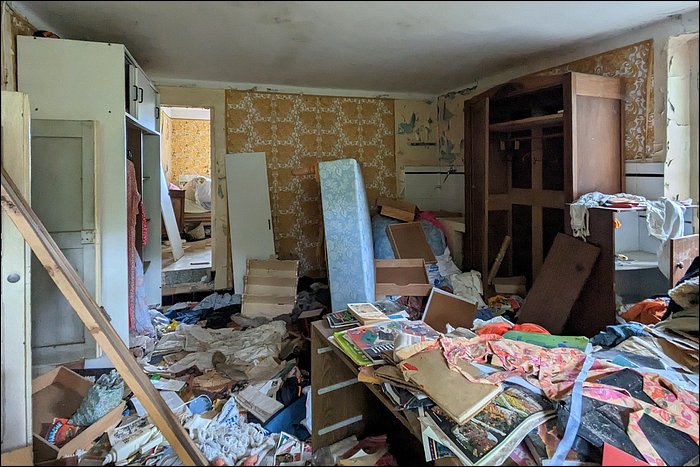
Given the extent of the degradation, it is clear that the last occupants departed long ago. Often, it is the state of the garden, rather than the interior, that allows one to date such a departure. To suggest a decade or slightly more would be entirely plausible. The house exists in a state of ultra-intense devastation. It has been thoroughly plundered, defaced, and desecrated.
The layout is linear: kitchen, bedroom, bedroom, and living room. It is, in essence, quite poorly conceived, in the sense that a child would have had to traverse the parental bedroom to reach the kitchen or the latrines. This is not altogether surprising; it is a modest structure, yet it remains pleasantly serene and anchored in nature.
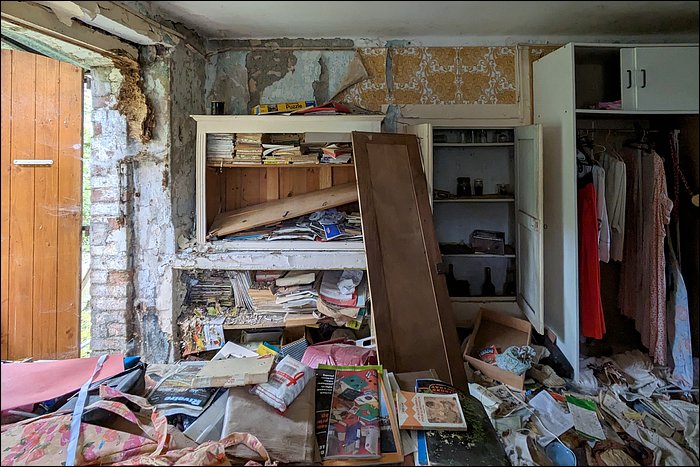
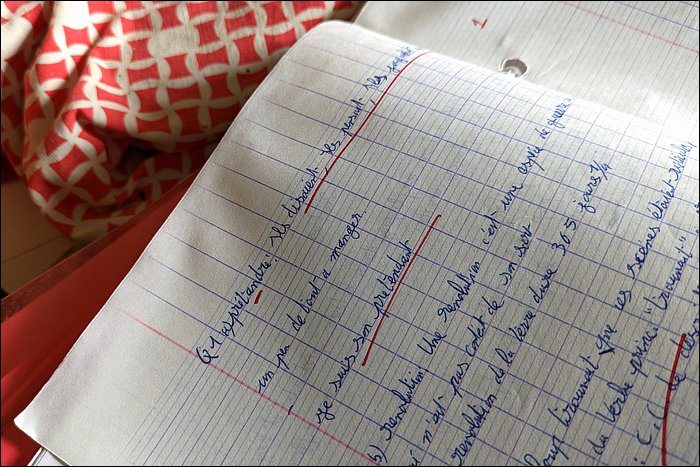
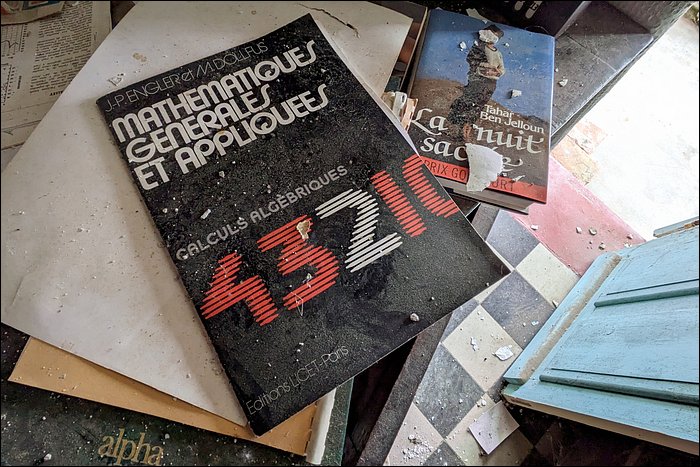
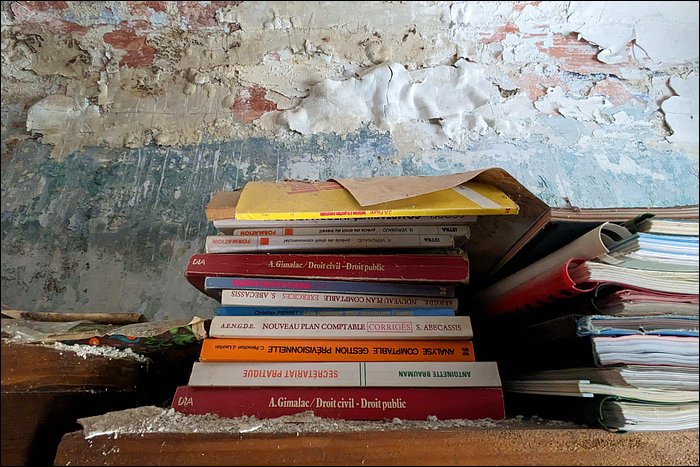
All administrative documents have been cleared away: not a single invoice remains, nor a medical record, nor even a simple piece of correspondence. No photographs, either. Someone intervened to render this house anonymous, to say the least. Through the medium of old school documents - the only vestiges remaining - we have identified three individuals.
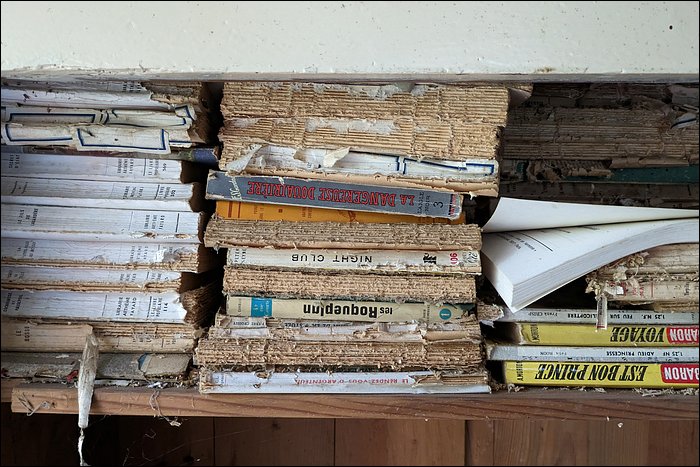
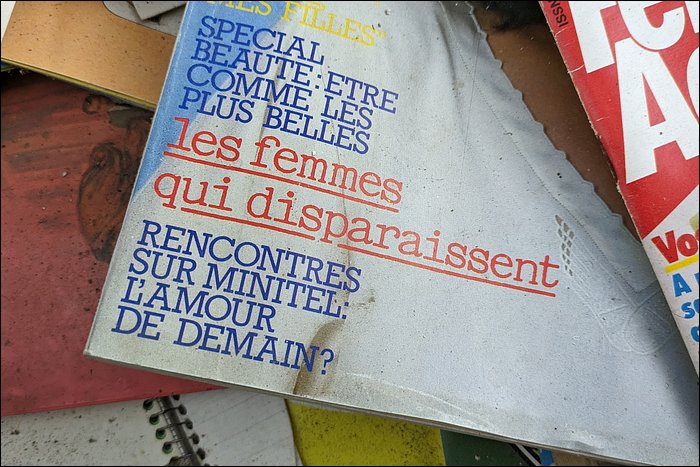
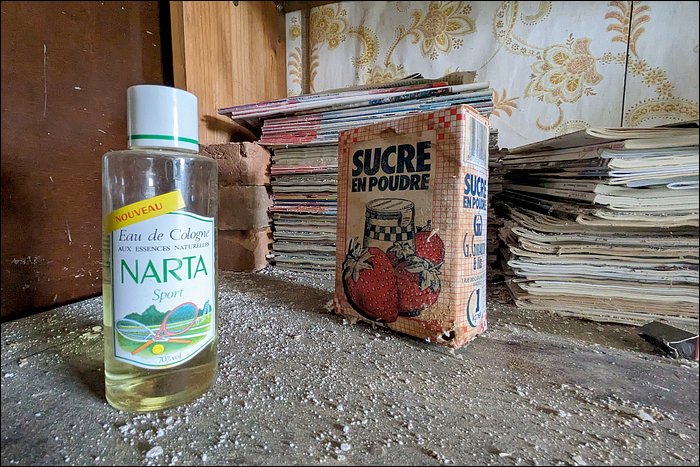
Firstly, Marielle. It is "conceivable" that she was the primary occupant. Within the house remain accounting lessons and an internship report from a local supermarket. The dwelling reveals a staggering number of Femme Actuelle magazines and a clutter of Harlequin romance novels. Considering the overall aesthetic, there is no doubt that this was a woman's home.
We discovered a child's bedroom which, unmistakably, belonged to a boy named Frédéric. He attended school in the very early 1980s. He does not share Marielle's surname, and due to our deliberate lack of investigation, we cannot confirm that Marielle is his mother, though such a connection seems highly probable. In any event, Frédéric bears a very common name, which only compounds the difficulty of any research.
Lastly, we noted school papers, in fewer numbers, belonging to one Frédérique. Slightly older than Frédéric, she too bears a different surname. Furthermore, we found no trace of a girl's bedroom. All of this shall remain shrouded in mystery - and for the peace of mind of these people, perhaps it is for the best.
Hardly had we entered the house when we heard a considerable commotion. Through a French window whose panes stood wide open, we saw a grey pick-up truck enter the battered driveway and come to a halt. A man clad in a fluorescent orange vest stepped out: a hunter. It was not long before the first gunshot rang out. Good grief - this is the second time in mere months that I have found myself at the heart of a hunt. Unable to easily signal my presence, save for reciting poetry at the top of my lungs, the situation remained deeply unpleasant.
Pigeon, bird in raiment of grey,
In the hell of cities,
From my gaze you slip away,
You are truly the most agile.
Thus, I waited for a long time - a very long time - within the house, waiting for the danger to subside. Did I have any other choice, especially considering I was dressed in brown and black (how clever of me). Hen, beautiful in your ochre dress, in the abyss of neglect, my eyes implore you. As the clamor gradually receded, I chose to depart, leaving this depopulated world to its prison of silence and decay.